Subway Menu With Prices 2026 Juice

This 2026 guide lays out a straightforward overview of the Subway pricing menu for 2026. It highlights what diners in the USA need to know when comparing costs.

Nationwide, Subway has added the Fresh Value Menu offers and expanded Subway Series items. Even so, regional pricing differs, with NYC posting above-average prices. As one example, the Bacon, Egg & Cheese sandwich costs $8.39 in NYC. New Subway Series options like Spicy Nacho Chicken and the Beast sandwich are listed in both 6″ and footlong formats.


The refreshed lineup also emphasizes value picks. Many participating stores offer four Deli Faves for $3.99 on 6″ subs, Protein Pockets for $3.99, and Sub of the Day for around $4.99. Remember, prices in markets like California, Washington, Alaska, and Hawaii can be more expensive. Delivery or third-party fees can also increase the final total.

This article series will explain bread options, Subway menu prices with pictures, and how to find local costs. Treat this opening part as a quick primer. From there, we will move into more specific price examples, bread choices, add-ons like avocado, and catering bundles in the sections that follow.

Overview Of The Subway Menu And New 2026 Updates

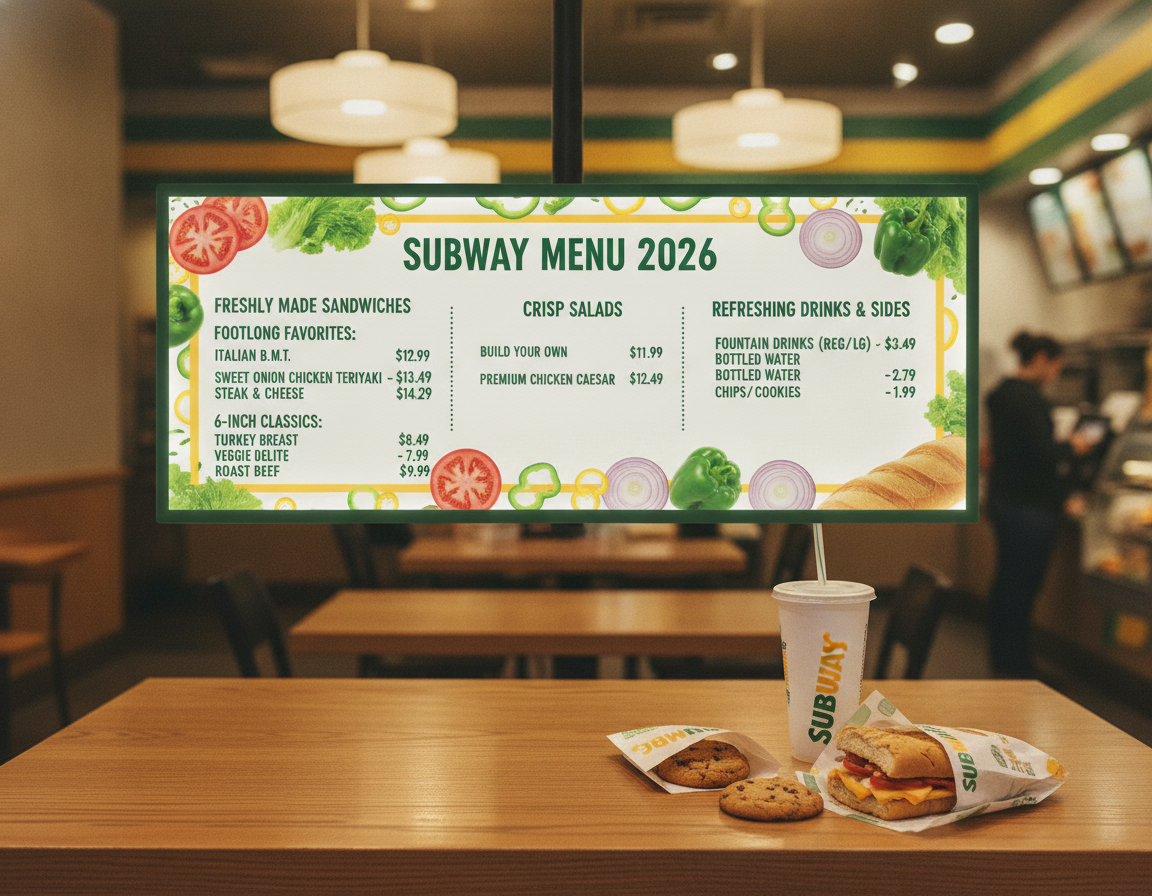
Subway Menu With Prices 2026

Subway’s latest 2026 refresh brings in fresh flavor combinations and more visible pricing cues. Subway’s Fresh Value Menu will be seen in most U.S. markets. Select markets will also feature limited-time breads and signature sandwiches with stronger flavor profiles. Availability varies by store, so confirm nearby store menus before ordering.

Fresh 2026 Menu Additions

The chain rolled out the Subway Series with twelve new sandwiches and signature sauces. The newer value menu highlights 15 entrees under $5, including Deli Faves and Protein Pockets at $3.99. In select markets like New York, diners can find occasional limited breads, such as the ghost pepper return. Major city markets will also feature expanded all-day breakfast.

How Pricing Varies By Location

Current Subway menu prices shift considerably by region. 6″ sandwiches cost between $5 and $8 in most areas, while footlongs range from $8 to $12. Prices are higher in California, Washington, Alaska, and Hawaii. There are also extra charges for tax, delivery, and third-party fees. Use the Subway App to verify current local offers and participating locations.

How To Locate Subway Menu And Price PDFs

Subway provides downloadable subway menu PDFs on Subway.com and in the Subway app. Independent menu-price sites like SubwayMenuPrices.org can help compare local prices and menus. If a local restaurant doesn’t have a bread or topping, the app will note it before checkout.

Pricing Source What It Shows Main Use
Subway.com Formal menu pages, nutrition facts, and PDF menu downloads Verify ingredients and formal pricing for company announcements
Subway Mobile App Real-time local pricing, Subway App deals, participating locations Compare nearby stores, order ahead, and redeem digital deals
SubwayMenuPrices.org Market-by-market price comparisons and menu snapshots Simple cross-market price checks before ordering
Onsite menu displays Current restaurant prices, specials, breads, toppings, and limited items Verify what is available at that location that day

2026 Subway Menu With Prices

Here is a quick breakdown of recent Subway menu prices and representative items. This helps readers compare typical costs and choices for 2026. Costs differ by region and participating restaurants, with increased prices in states like California, Washington, Alaska, and Hawaii. These examples combine New York City figures and national value-menu listings to give a practical snapshot of subway menu prices across formats.

Popular Sandwich Sample Price Ranges

Sample sandwich prices combines New York City highlights and broader lists. A Steak & Cheese 6″ often runs near $10.79 with a footlong about $16.19. A footlong Spicy Nacho Chicken can reach about $15.39. Signature premium options like The Beast footlong may list near $17.89. Traditional choices vary more widely: Meatball 6″ from $5.49 to $8.69 and footlong examples near $12.89 in some menus.

Sandwich Approx. 6″ Price Footlong Cost (Approx.) Calorie Range (Approx.)
Steak & Cheese About $10.79 $16.19 About 650–1,300
Nacho-Style Spicy Chicken $8.99 About $15.39 700–1,400
Beast Sandwich Approx. $11.19 About $17.89 About 900–1,600
Meatball Marinara $5.49–$8.69 Approx. $8.79–$12.89 700–1,200

Prices For Breakfast, Wraps, Salads, And Bowls

The subway breakfast menu lists familiar morning items with mid-range pricing. A Bacon Egg and Cheese breakfast sandwich is about $8.39. Wraps may cost more: a Steak, Egg & Cheese wrap example is roughly $13.79.

Bowls and breadless choices often carry near-footlong pricing for premium fillings. A Philly-style bowl often comes in near $16.19. The sweet onion chicken teriyaki bowl option shows near $15.39. Salad choices like Chicken & Bacon Ranch or a Philly salad are commonly about $13.19. For shoppers asking how much is a footlong at Subway across different items, expect $10–$18 depending on the recipe and market.

Category Expected Price Details
Breakfast Sandwiches Approx. $5.49–$8.39 Egg-based items, regional availability
Subway Wraps Approx. $8.99–$13.79 Check the subway wraps menu with prices for store-level variations
No Bready Bowls $12.99–$16.19 Breadless options priced near footlongs
Subway Salads Approx. $9.99–$13.19 Subway salad choices usually blend meats, toppings, and vegetables

Cookies, Sides, Drinks, Bundles, And Catering

Sides and combo deals remain central to value. Many combo examples (sub + chips + drink) sit close to $8–$10 at many locations. Subway’s value menu spotlights Deli Faves 6″ at $3.99, Protein Pockets at $3.99, and Sub of the Day 6″ for $4.99 on rotation.

Cookie pricing shows a broad range. The 6-pack cookie option can be about $4.49 while a single footlong cookie lists near $5.00–$5.99. For reference on the single item price, the subway footlong cookie price often falls within that band depending on store.

Menu Item Sample Price Quick Notes
Combo (Sub + Chips + Drink) About $8–$10 Available at participating stores; adding chips and a drink may cost about $2 on value items
Cookie 6-Pack Approx. $4.49 Party/snack option
Footlong Dessert Cookie $5.00–$5.99 High-calorie indulgence; varies by location
Bottled Beverages Approx. $2.99–$3.49 Fountain prices vary by restaurant
Group Catering Platters About $60–$75 Group platters built around sandwiches and wraps

Budget-conscious shoppers should check local menus and apps for region-specific subway menu prices. Aggregate guides like SubwayMenuPrices.org show full subway menu details and can support side-by-side checking of offers. Remember taxes and delivery costs when estimating final costs.

Bread, Toppings, Sauces And Customization Options (See The Bread Options And Toppings List)

Subway empowers you to build your perfect sandwich. Start by choosing from a selection of available Subway breads. Then, add your favorite veggies, proteins, and sauces. The Subway website and app provide a list of available bread options at your local Subway.

Full List Of Common Subway Bread Choices

  • Italian — the classic base for many subs and often cited as the best subway bread by fans who like a soft crumb.
  • Hearty Multigrain — a more substantial bread with seeds, texture, and a heartier feel.
  • Wheat — a milder whole-wheat option that pairs well with turkey and veggie fillings.
  • Flatbread / Lavash — a thinner bread style available in many locations and often used for breakfast or lighter orders.
  • Garlic & Herb — a flavored option available in select markets, often used for limited-time sandwiches.

Subway Bread Names And Local Varieties

Select metro and regional Subway restaurants feature specialty items like lavash or occasional limited breads. The subway bread options list can vary by store because not every restaurant stocks every loaf.

Subway Menu Toppings And List Of Subway Toppings

  • Lettuce, Roma tomatoes, cucumbers, red onions, green peppers
  • Olives, pickled toppings, spinach, jalapeños, and banana peppers
  • Avocado — offered as an extra topping at many restaurants

Common Subway Sauces And Condiments In The USA

Subway provides classic and signature sauces. Common choices include mayo, honey mustard, garlic aioli, chipotle, creamy Sriracha, sweet onion sauce, and Peppercorn Ranch. For the most current U.S. sauce list, check the app or in-store menu where regional sauces may appear.

Gluten-Free Choices And Dietary Alternatives

Can customers get gluten free bread at Subway? Certain participating locations have carried gluten-free bread on a trial basis. Many guests choose No Bready Bowls or salads as an alternative to avoid gluten. Remember the possibility of cross-contact risks when ordering subway gluten free bread and check local availability before assuming it’s an option.

Subway Customization Tips

  1. Pick the bread that complements your protein and sauces to balance flavors.
  2. Ask for hand-chopped veggies to keep freshness high.
  3. Open the Subway app to see the bread names, local bread choices, and store-specific options before ordering.

Deals, Rewards, And How To Save On Subway In 2026

Scoring the best deal at Subway requires a mix of timing, app use, and smart ordering habits. Check available deals before placing your order. This helps you capture discounts and avoid unexpected delivery fees. Remember, prices can vary by state, so include that in your budget.

Fresh Value Menu deals can be useful for everyday savings. The value menu includes around 15 entrees under $5, with Deli Faves and Protein Pockets often priced at $3.99. The daily sub offer offers a $6.99 six-inch sandwich, helping to trim your meal cost. Including chips and a beverage can convert a budget item into a more satisfying meal for a small extra charge.

Subway MVP Rewards makes it easier to earn and redeem points. Create an account, link your purchases through the Subway app, and start collecting points. These points can be exchanged for Subway Cash on future orders. The Subway app also offers exclusive promotions and digital coupons, adding to your savings.

To cut costs even more, combine coupons with strategic ordering. Search for Subway coupons 2026 before large orders and pair them with in-app deals when possible. Select Fresh Value Menu items or share a footlong to split the cost. For small extras, choose bundled chips and drinks instead of separate items.

Ordering for groups or events can also save money. Group platters and boxed meals often lower the cost per sandwich. Review offers on SubwayMenuPrices.org and the Subway app to find the best deals for your event. Be sure to include taxes, regional price hikes, and extra charges for customizations when calculating the final cost.

Keep current on new menu prices and promotional periods. Join Subway’s email list and enable app notifications to catch special offers and flash coupons. Families may also look for the latest kids meal promotions, which often include toys or bundled savings at certain locations.

Changing a handful of ordering habits can meaningfully cut your spending at Subway. Order during value hours, use rewards, compare catering options, and be aware of regional price variations. With these savings habits, you can save money while enjoying Subway’s catering and everyday deals.

Final Thoughts

The Subway Menu With Prices 2026 guide offers a mix of new and classic options. Six-inch sandwich prices usually range from $5 to $8, while footlongs cost between $8 and $12. Specialty items and locations in big cities like New York can increase prices. Customers should verify local prices, as availability of all-day breakfast and regional variations differ.

Subway’s 2026 Fresh Value Menu includes about 15 items under $5. That lineup features Deli Faves, Protein Pockets, and Sub of the Day. Availability and pricing can vary by store and region. The best way to find current offers and digital savings is through official Subway channels. The Subway app, MVP Rewards, and restaurant promotions are useful for lowering costs on regular and catering orders.

For current Subway prices and menu details, visit Subway.com or use the Subway app. The official channels include up-to-date pricing, downloadable PDFs, and nutrition facts. When searching for the newest menu items or a full list of customization options, these tools are important. This article serves as a practical guide for planning quick meals or group orders.

Grease Trap Pumping in La Crescenta Montrose Preventative Maintenance ROI Calculating Cost Savings

Running a successful food service operation is hard work. You manage stock, team members, and guests day after day. The last thing you need is a plumbing disaster caused by poor grease management. This is where our team can help. Our nearby team works hard to keep your commercial kitchen functioning without disruption. We help you remain compliant with health regulations while avoiding expensive emergencies.

View details about Grease Cleaning Pros in La Crescenta Montrose

Check out Grease Cleaning Pros in La Mirada

View details about Grease Cleaning Pros in Long Beach

This guide explains the essential maintenance your plumbing system needs. You’ll learn about grease interceptors, powerful hydro jetting solutions, and environmentally friendly oil recycling.

Our mission is to provide reliable, hassle-free service that fits your schedule. We transform a messy chore into a simple, scheduled part of your business operations.

Main Takeaways

  • Maintaining your plumbing system properly is essential for restaurant compliance and daily operation.
  • Routine service helps prevent expensive emergencies and keeps your business operating smoothly.
  • Hydro jetting offers a powerful, long-term solution for clogged pipes and drains.
  • Recycling used cooking oil supports sustainability and can create valuable products.
  • Working with a committed local provider gives you dependable, scheduled maintenance.
  • Knowing the warning signs of a problem can help you avoid major disruptions.
  • A professional crew can work around your hours to reduce business interruption.

Why Grease Trap Cleaning Is Critical For Northridge Restaurants

Infrastructure protection is usually associated with buildings, but it also describes your restaurant’s hidden plumbing system perfectly. For every local food service business, maintaining this system is not optional—it’s a core operational necessity.

Consistent maintenance helps protect your routine operations, your budget, and your standing with regulators. Failing to maintain it can trigger a series of issues that no restaurant owner wants to face.

Avoiding Costly Plumbing Disasters And Downtime

Fats, oils, and grease (FOG) are hidden troublemakers. Even a highly attentive kitchen team cannot keep all of it out of your drainage system.

Dishwater transports dissolved grease. Steam from cooking moves particles that cool off and cling to pipe walls. A simple mistake during the dinner rush can send a problematic substance down the sink.

This gradual buildup is unavoidable. If nothing is done, it hardens into blockages that can shut down your kitchen entirely.

Paying for an emergency plumbing visit is only the first expense. You also face lost revenue during the shutdown and potential damage to your property.

Regular professional maintenance is far more affordable in the long run. It acts as an insurance policy against these catastrophic failures.

Our team provides this essential preventative care. We identify small issues long before they escalate into full-blown emergencies.

Grease Cleaning Pros in La Crescenta Montrose

Staying Compliant With Local Health And Safety Regulations

Local health departments enforce strict rules for a vital reason. They need to protect the municipal sewer system from damage caused by FOG.

Failing to comply can create serious consequences for your business. Significant penalties are common when violations occur.

Repeated offenses can risk the suspension of your operating license. This level of negligence can also harm the local environment.

Regular service from a dedicated provider ensures you pass every inspection. Our team manages the cleaning and gives you the proper documentation.

This proactive method prevents the foul odors and backups that warn of trouble. It gives you confidence and peace of mind so you can focus on your customers.

Consider it the equivalent of a scheduled oil change for essential equipment. It keeps everything running smoothly despite regular kitchen activities.

How Frequently Should Your Grease Trap Be Professionally Cleaned?

A very common question from restaurant managers is how often this important maintenance should be scheduled. No one-size-fits-all calendar date works for every operation.

In most cases, restaurants need service every 30 to 90 days for their equipment. That range depends completely on your kitchen’s daily volume and the kind of food you make.

A custom schedule is the best way to ensure efficiency and compliance. It protects your plumbing and keeps your operations smooth.

Adjusting Schedules To Match Your Kitchen’s Volume And Menu

The two biggest factors are your menu and your customer volume. A busy establishment with multiple fryers will produce far more waste than a small café.

High-volume locations, like steakhouses or fried chicken spots, often need monthly service. They produce too much grease and waste to wait any longer.

Smaller bakeries or pizza shops might need monthly checks at first. Following assessment, they might stretch service to cleaning every 60 to 90 days.

Our specialists at Grease Cleaning Pros assess your exact needs. Our review includes your weekly volume, cooking style, and dishwashing practices.

This evaluation allows us to build a plan that helps prevent problems. It also optimizes your maintenance budget by avoiding unnecessary visits.

  • Busy hotel kitchens: Often require the most frequent attention.
  • Family diners: May fall into a middle-ground schedule.
  • Sandwich shops: Could qualify for extended service intervals.

The Risks Of Waiting: From Foul Odors To Fines

Ignoring your service schedule opens the door to a chain of issues. A unit reaches a danger point once it gets to 25% capacity.

At this level, the device stops working properly. At that stage, it cannot effectively separate grease and oil from wastewater.

The first signs are often subtle. You may notice sinks draining more slowly than normal.

Then, persistent foul odors begin to emanate from the drains. The smell can spread into customer areas and harm your guests’ experience.

The next costly development is often a complete blockage. These blockages can shut down the kitchen during your busiest periods.

Health inspectors in your area check service records very closely. Neglect leads to violations and substantial financial penalties.

Routine professional cleaning removes these risks completely. It ensures your system functions at peak performance.

With a dedicated provider, you get predictable scheduling and transparent pricing. That relationship gives you peace of mind because your kitchen stays protected.

Understanding Your Setup: Grease Traps And Grease Interceptors

Food service businesses do not all handle fats, oils, and grease with the same equipment. Two primary systems handle this crucial task. Knowing which one you have is essential for proper care and compliance.

You can think of a grease trap as a smaller, compact defender. A grease interceptor is the heavy-duty champion. Both perform the same vital job but on vastly different scales.

In many cases, local rules decide which system you must use. The right choice is based on your kitchen’s size, your menu, and how much water you use each day.

In-Sink Grease Traps For Small Establishments

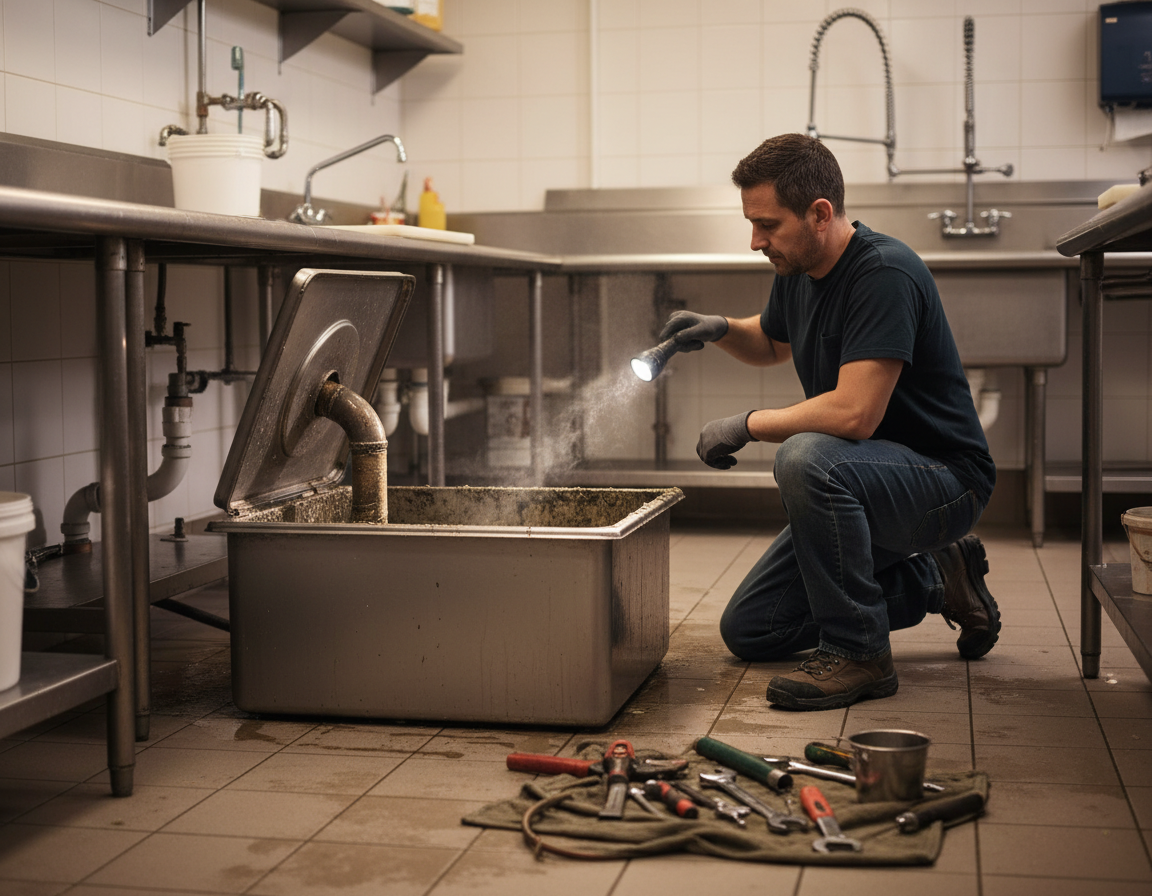
These systems are installed right under sinks or dishwashing stations. They are intended for smaller-volume operations.

A standard in-sink grease trap usually holds 20 to 50 gallons. It is perfect for businesses with limited frying.

Common ideal locations include:

  • Coffee shops and small cafes
  • Deli counters and bakeries
  • Pizza restaurants that produce limited grease

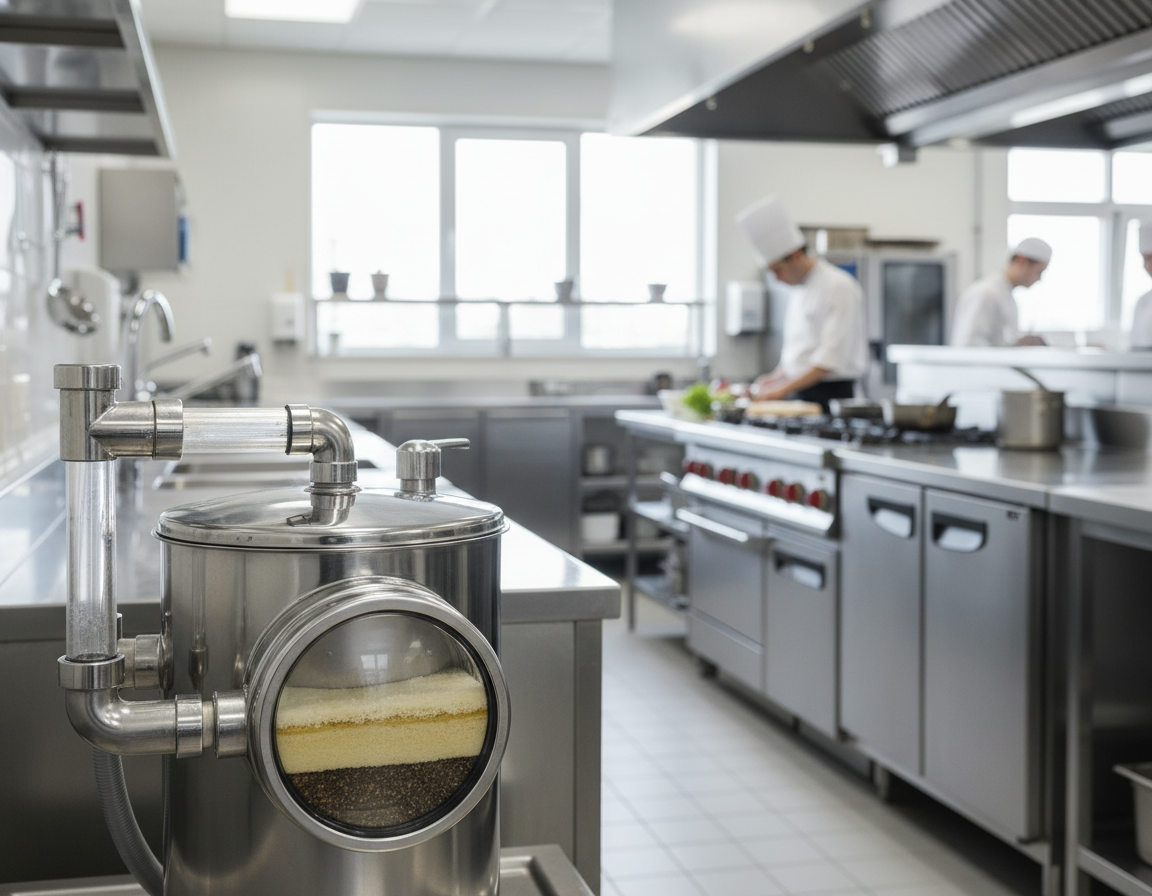
The system works by slowing wastewater flow. This allows fats to cool, solidify, and float to the top for easy removal. Regular maintenance prevents cooking oil from causing problems.

Underground Grease Interceptors For High-Output Kitchens

Bigger establishments need a stronger, more robust system. An underground grease interceptor is a large tank installed outside below ground.

Most of these tanks are constructed from concrete or strong plastic. Capacities range from 500 to 5,000 gallons or more.

This type of grease trap interceptor is necessary for:

  • Busy hotel kitchens and popular steakhouses
  • Institutional cafeterias and food processors
  • Any location with high-volume frying

The basic principle is the same as with smaller traps, but the scale is much larger. They are built to handle heavy daily grease production.

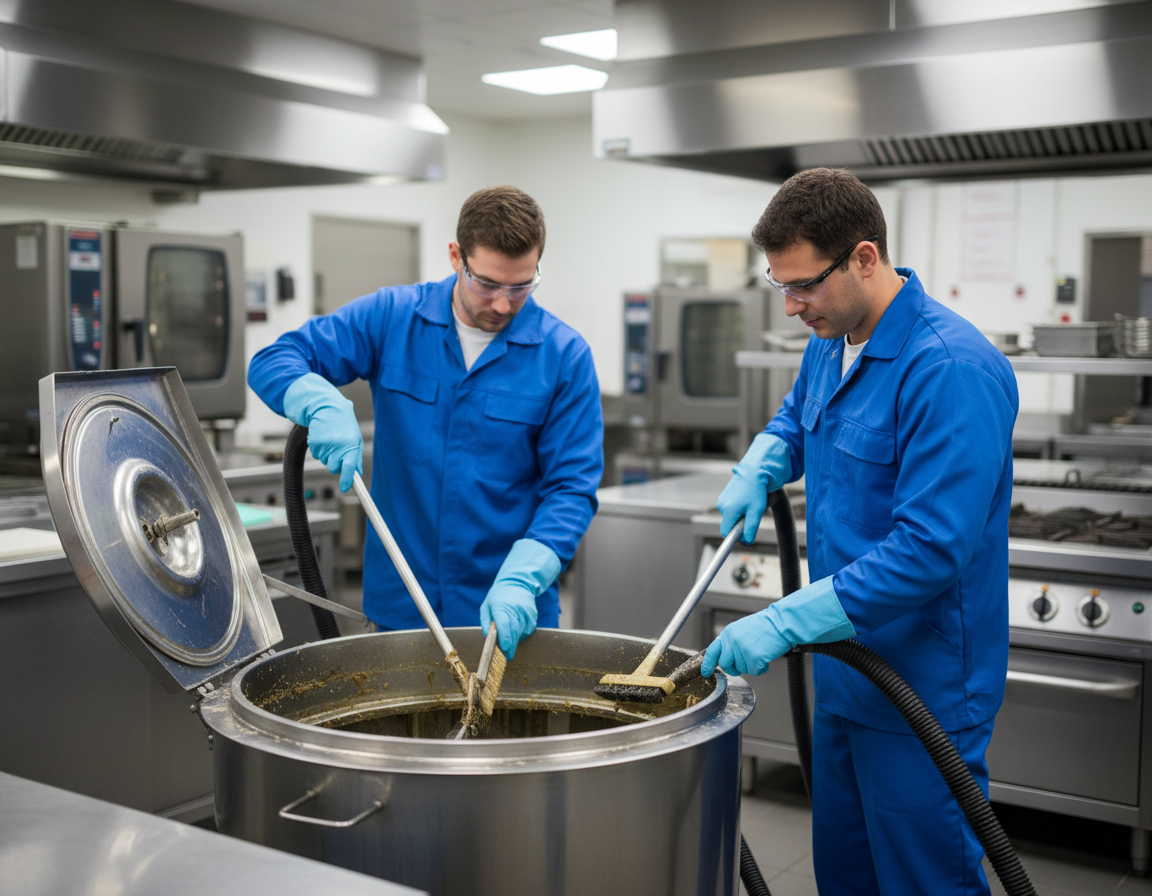
Cleaning large grease interceptors calls for specialized tools and equipment. Full service often requires powerful vacuum trucks.

Proper care of either system protects the municipal sewer system. It prevents used cooking oil and grease from causing damage.

Our team at Grease Cleaning Pros services both types. We use portable pumps for under-sink units and powerful trucks for large interceptors.

Never pour hot water down the drain to clear a blockage. Doing so can worsen the issue by sending grease farther down the plumbing line.

Knowing your exact grease trap interceptor setup is the first step toward reliable maintenance.

Why Hydro Jetting Is A Superior Drain Cleaning Solution

The search for an effective solution to chronic plumbing blockages leads many to discover advanced hydro jetting technology. Unlike temporary fixes, this method addresses the root cause of drainage problems.

This method delivers a complete cleaning that can make your pipes feel almost like new again. Knowing why it performs better than other methods is important for any business owner.

When drains slow or clog, many restaurant owners reach for quick remedies. These common attempts often make the problem worse over time.

The Weaknesses Of Hot Water And Chemical Treatments

Using hot water down the drain can look like a simple solution. It may temporarily melt grease and create brief relief.

But the melted grease often just travels deeper into the plumbing. It then cools and solidifies in a harder-to-reach spot.

This creates a larger, more stubborn blockage downstream. The issue is only moved, not solved.

Chemical treatments bring an entirely different set of concerns. They are corrosive to pipe materials over repeated use.

These harsh chemicals create safety hazards for your staff and the environment. They are likewise ineffective at removing solidified grease buildup.

Each of these methods is basically a temporary patch on a bigger problem. They do not deliver the lasting results your kitchen requires.

Restoring Full Pipe Flow With High-Pressure Precision

Hydro jetting represents the permanent solution to these persistent issues. It uses highly pressurized water streams to scours pipe walls completely clean.

It provides as much as 4000 PSI of raw cleaning power. This intense pressure blasts away years of accumulated residue, even hardened material.

The hydro jet effectively removes away years buildup in a single session. Rather than opening a narrow path, it cleans the entire inside circumference of the pipe.

The process restores full pipe flow and reduces the chance of immediate re-clogging. Compared with snaking, it does not leave residual debris inside the line.

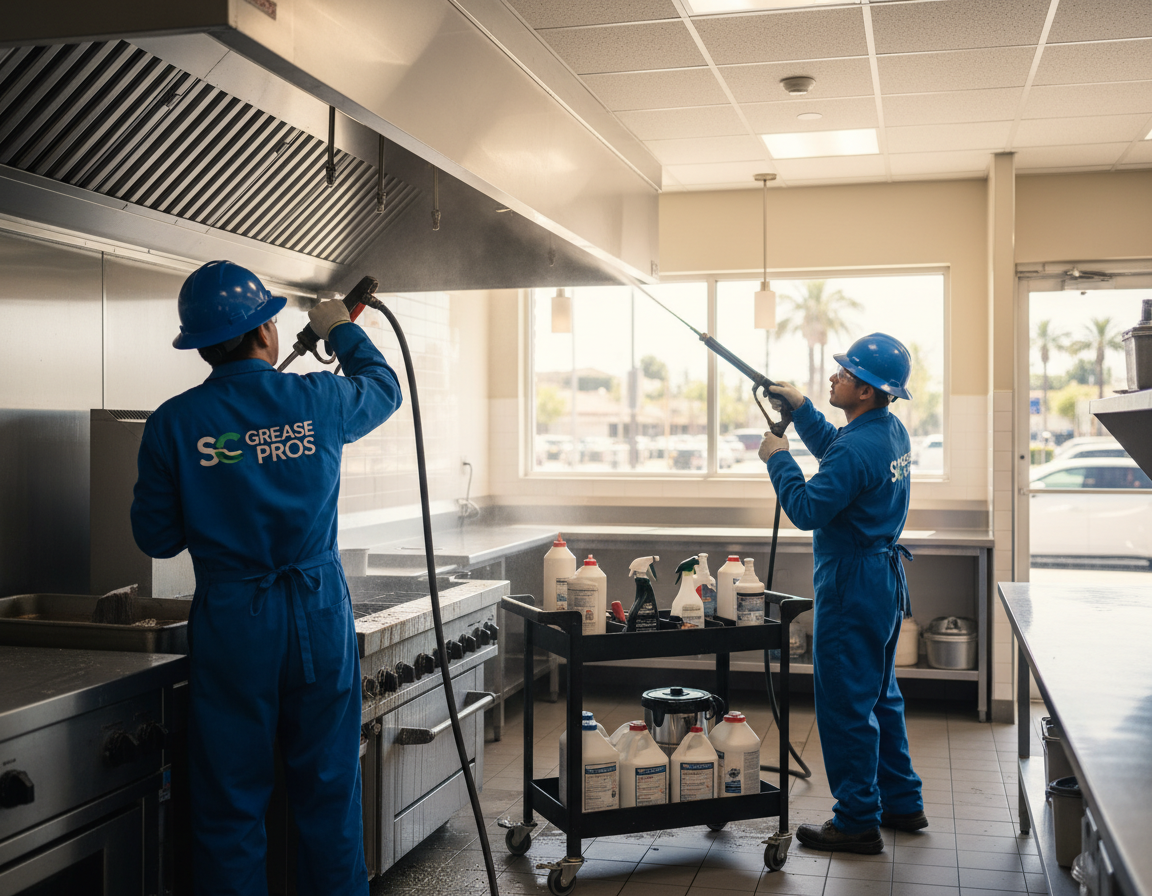
This eco-friendly approach uses only water, without harsh chemicals that could damage pipes. Grease Cleaning Pros utilizes state-of-the-art equipment for this task.

Advanced hydro jetting equipment allows us to navigate bends in the pipe system easily. That allows it to travel deep into your system and provide a comprehensive cleaning.

You may need hydro jetting if traditional methods have failed. With enough force, hydro jetting blasts through even the toughest blockages.

Once the service is complete, your drains are better prepared for the busiest kitchen hours. You gain peace of mind with pipes that function like new.

For preventative maintenance or stubborn clogs, this method delivers superior results. That makes it the intelligent option for a dependable, efficient commercial kitchen.

Warning Signals That You Need Grease Cleaning Pros In Northridge

Noticing the early warning signs from your drainage system is the key to avoiding a full-scale kitchen shutdown. Your plumbing sends clear signals when buildup reaches a critical point.

Knowing how to spot these signs can help your business avoid expensive repairs and serious downtime. Ignoring them is a gamble no restaurant owner should take.

Slow Drains, Backups, And Unusual Noises

Slow drains at sinks or dish stations are often the earliest clue. That is a sign that buildup is limiting water flow through your plumbing.

When multiple fixtures back up at the same time, the problem is likely in your main line. This is a problem that demands prompt professional service.

Pay attention to odd gurgling sounds coming from drains or toilets. Those sounds often mean a blockage is trapping air in the system.

If clogs keep coming back after snaking, the root issue has not been solved. At that point, you probably need hydro jetting to achieve a complete cleaning.

Lingering Odors And Visible Grease Issues

Your sense of smell is a surprisingly powerful diagnostic tool. Persistent foul odors, particularly sewage odors near drains, suggest that waste is not moving properly.

Visible issues are an obvious warning sign. An oily film on standing water or debris floating inside a grease trap indicates the system is overwhelmed.

Pooling water near an exterior interceptor lid can indicate an overflow condition. This creates a major sanitation hazard on your property.

Even consistently slick kitchen floors may point to a hidden issue. It may be a sign of used cooking oil leaking from a damaged line.

When you spot any of these signs, contact our team immediately. Early service helps prevent small problems from becoming major breakdowns.

The experts at Grease Cleaning Pros can perform a complete evaluation. We’ll tell you if you need hydro pressure cleaning or another service.

Don’t delay until a full disaster unfolds. Reach out today to get quote and restore your kitchen’s smooth operation.

Our Eco-Friendly Commitment: Used Cooking Oil Recycling

A circular economy starts when businesses rethink what they view as waste. For kitchens, the used cooking oil from your fryers is a resource with tremendous potential.

We view this material as liquid gold rather than a waste problem. A professional service partnership stops it from turning into a plumbing disaster.

This commitment helps ensure your cooking oil never becomes an environmental threat. Rather than becoming waste, it begins a useful second life through proper recycling.

Turning Waste Into Biodiesel And Sustainable Products

After collection, your old fryer oil starts an amazing journey. The oil is filtered and processed in certified recycling facilities.

Your old fryer oil gets recycled into cleaner-burning biodiesel fuel. That gets recycled biodiesel can power trucks, boats, and heating systems.

This process reduces greenhouse gas emissions by up to 85% compared to petroleum diesel. That means your kitchen becomes part of the climate solution.

Other byproducts help keep resources in circulation. They may be converted into products such as animal feed, lubricants, soaps, and cosmetics.

Each gallon you recycle can prevent roughly one million gallons of water from being contaminated. That significantly helps protect local water quality.

How Your Business Benefits The Environment And Your Bottom Line

Correct grease trap cleaning and used oil collection create a positive cycle. This helps you maintain clean plumbing while staying in compliance.

Beyond trap cleaning, this service offers financial returns. Many establishments earn rebates from their used cooking oil.

That can put money back into your pocket, which many owners do not realize. It turns a cost center into a small revenue stream.

The professional cleaning team provides records of your recycling totals. That supports sustainability reporting and green certification efforts.

More and more customers appreciate environmentally responsible practices. Choosing cleaning pros helps position your business in line with current environmental standards.

Want to turn your waste stream into something more valuable? Reach out today to get quote and begin benefiting from a smarter system.

Partner With Us For Reliable, Hassle-Free Service

Your operation deserves a maintenance plan that matches the effort of your staff. Working with Grease Cleaning Pros means choosing a local expert focused on keeping your operation smooth. Our team provides the reliable, low-stress support your business needs to thrive.

We know that downtime costs your business money. Our team works around your schedule for service, whether early morning or late evening. This scheduling method works perfectly for avoiding disruption during rush periods.

Our efficient vacuum trucks perform the job quickly and quietly. Our service includes full professional maintenance, covering everything from trap cleaning through hydro jetting. You also receive the paperwork you need for inspections.

Ready to make kitchen maintenance simpler? Get quote today and join many local restaurants that rely on us for consistent results.

Related: Affordable Options for Grease Trap Cleaning in Burbank

Why Quality Matters for Grease Trap Cleaning in Pomona

Running a restaurant in Pomona comes with a long list of daily tasks. One of the most important, yet commonly overlooked, jobs is controlling the fats, oils, and grease (FOG) flowing from your kitchen. Neglecting this duty can lead to serious problems. This is where a dependable local partner becomes invaluable.

Visit the site of Grease Cleaning Pros in Pomona

Explore more about Grease Cleaning Pros in Santa Barbara

Discover more about Grease Cleaning Pros in Torrance

Grease Cleaning Pros is the local specialist you can rely on for this critical service. Our team understands that maintaining your grease interceptor is not just one more routine chore. It is a vital investment in the health of your business and our community.

If not cared for properly, a clogged system can create serious problems. That includes unpleasant backups, expensive health code violations, and significant fines. In severe cases, it can even force a temporary operational shutdown. No food service owner can afford to ignore risks like these.

Our team is the dependable, friendly solution trusted by kitchens across Pomona. We focus on full compliance and your peace of mind. With deep local knowledge, we ensure your operations run smoothly and safely.

Our service is built to be completely stress-free. Our experts work around your schedule and create as little disruption as possible. Ready to learn how proper FOG management protects your business? Explore our comprehensive service offerings below.

Key Takeaways

  • Consistent grease interceptor care is an essential investment for any food service operation.
  • Ignoring maintenance can cause health code issues, expensive fines, and possible shutdowns.
  • A reliable local provider helps ensure compliance and lower risk.
  • Professional service should be convenient and designed around a busy kitchen’s hours.
  • Correct FOG management is vital for the safe and smooth running of your restaurant.
  • Choosing an experienced team protects your reputation and gives you peace of mind.
  • Preventive care is always more cost-effective than emergency repairs or regulatory penalties.

Grease Cleaning Pros in Pomona

Welcome To Grease Cleaning Pros In Pomona, Your Local Expert

A well-maintained FOG management system is the hidden hero behind every successful food service operation in our city. We are your neighbors, dedicated to keeping that system running perfectly.

Our mission is straightforward. Our team delivers reliable, high-level service that helps protect both your business and our community sewer system. Consider us your first line of defense against costly backups and code violations.

Our team is made up of certified professionals with deep experience. They know local health codes inside and out. Even more importantly, they understand the fast pace of a commercial kitchen.

We founded our company around a customer-first philosophy. You will always receive flexible scheduling, transparent pricing, and clear communication. Our goal is to make this essential maintenance *genuinely* hassle-free.

We invest in professional-grade equipment for every job. All waste is handled with environmentally responsible disposal methods. We care about the community just as much as we care about your kitchen.

We know every minute of downtime costs you money. We make minimal disruption a priority. We frequently work around your schedule, servicing interceptors during off-hours before prep begins or after closing.

We are proud to be the trusted partner of dozens of local eateries. We work with everyone from large national chains to respected family-owned cafés. By choosing our team, you choose a cleaning pros partner that cares about your long-term success.

The True Cost Of Ignoring Your Grease Trap

Overlooking your kitchen’s grease interceptor might seem like a way to save money. It is a gamble with serious consequences. The true price of neglect extends far beyond a simple service fee.

When this critical component fails, the consequences are serious and wide-ranging. It becomes an issue that can hurt your budget, your daily operations, and your reputation all at once.

Financial Penalties And Fines

Local authorities impose strict requirements for FOG management. The fines for non-compliance are not minor. These fines commonly start in the thousands of dollars and may climb much higher.

Available data shows penalties can range from $1,000 to as high as $50,000 for serious neglect. That is a direct financial loss with no return. It’s pure loss.

Contrast this with the predictable cost of routine care. Routine scheduled service usually costs just a few hundred dollars. Emergency repair work or major fines can cost thousands.

The financial logic is straightforward. Regular small investments help protect you from major losses later on.

Health Department Violations And Shutdowns

Having a health inspector discover a failing interceptor is a worst-case scenario. They can issue a “Cease and Desist” order on the spot. Your kitchen shuts down instantly.

The impact that follows can be brutal. You lose revenue for every meal you cannot serve. Perishable inventory spoils. Your staff is idle while you scramble for a fix.

This type of closure is not a short pause. It may last for days until the system is cleaned, inspected, and approved. The total financial damage from a shutdown often dwarfs any fine.

Consistent professional maintenance is your best defense against this scenario. It shows you are acting responsibly and helps keep your doors open.

Damage To Your Reputation And Customer Trust

Violations and shutdowns create documented records. The intangible cost to your reputation is even more devastating. News of a health violation spreads fast in our connected community.

Trust built over years can evaporate overnight. Customers often decide where to dine based on cleanliness and safety. A single event can permanently damage their perception of your establishment.

Direct liability risks also come into play. An overflow creates slippery floors. This leads to employee or customer slip-and-fall accidents.

Such incidents can trigger costly lawsuits. They may also harm expensive kitchen equipment when waste backs up into work areas.

Your good name is priceless to protect. Regular, documented care of your grease trap shows that you prioritize safety. It’s a silent but powerful message to everyone.

If you suspect you need a professional service now, don’t wait for a crisis. Taking action today is the practical and affordable decision.

Reach out to get quote and secure your business’s future. Prevention is always the most cost-effective path.

When Should Your Pomona Kitchen Clean Its Grease Trap?

Interceptor maintenance frequency can vary greatly depending on your kitchen’s output. No single schedule works for every kitchen. A well-planned schedule protects your plumbing system, your finances, and your compliance status.

Local codes usually set a very clear standard. These rules typically require cleaning once fats and solids fill 25% of the unit. At this point, efficiency drops fast. Legal and functional problems are likely.

Following this rule is non-negotiable. It keeps everything flowing correctly.

Why Most Restaurants Need Monthly To Quarterly Service

For many active eateries, grease traps need regular service. A busy kitchen that serves lots of fried food might require service every month. This keeps up with heavy use.

A smaller café often produces a lighter volume of grease. Because of lighter output, cafes might stretch service to a quarterly schedule. Each kitchen is different.

Certain operations produce even more demanding service needs. A crowded sports bar or a large hotel kitchen can sometimes fill an interceptor within only two weeks. These grease traps need very frequent care.

Avoid guessing about the right timeline. Regular checks reveal how quickly your unit fills. This data builds a perfect plan for you.

Factors That Affect Your Cleaning Schedule

A number of key factors influence how often your system needs service. Your menu is a huge factor. A place heavy on burgers and fries creates more waste than a salad spot.

The number of customers you serve each day affects the schedule. When business increases suddenly, buildup happens faster. A busy season may push you onto a monthly service schedule.

The size of your interceptor matters a lot. A small under-sink unit fills much faster than a large outdoor tank. Smaller cafés may need less frequent service when their equipment is properly sized.

Local health codes have the final say. The city of Pomona has specific rules that apply. Understanding them helps you avoid trouble and fines.

Strong kitchen habits also help. Scraping plates and using sink screens can slow down buildup. However, even excellent practices cannot replace the need for professional cleaning.

The best approach is to track everything. Keep detailed records of each pump-out. Note the date and how full the trap was.

This history reveals your unique service pattern. With that information, future service dates become easier to predict. This helps make sure you are never caught off guard.

Working with a reliable local team makes this process easy. They can build a schedule based on real data that matches your operation perfectly. This preventive step cuts stress and saves money in the long run.

Warning Signs That Your Grease Trap Needs Urgent Attention

Your kitchen’s plumbing system sends clear distress signals when it’s overwhelmed by fats, oils, and grease. Recognizing these warning signs is extremely important. Early action helps prevent a minor issue from becoming a full-scale emergency.

Never dismiss these symptoms as normal. These are clear signals that your interceptor system needs attention. Addressing them promptly protects your operations and your budget.

Slow Drains And Warning Gurgling Sounds

The most common early red flag is slow drainage. If water lingers in your three-compartment sink, it’s a sign. Grease buildup is restricting normal flow.

Listen closely to your floor drains. Gurgling or bubbling noises are not harmless. They indicate trapped air from a significant blockage in the lines.

This buildup signals that your interceptor is reaching capacity. At that point, your drains need expert attention before they fail altogether.

Bad Odors And Visible Grease Overflow

A sudden rotten egg odor is a serious warning sign. This odor comes from hydrogen sulfide gas. It forms when grease decomposes and it is toxic.

These foul odors create an unpleasant environment. They are hazardous for both staff and customers.

Visible backups are an even clearer sign of trouble. If you notice grease or food solids in sink basins after draining, act fast. A greasy film usually means the unit is overflowing and no longer working correctly.

This type of visible failure requires immediate service to help avoid a health violation.

Multiple Drains Clogging At Once

Are your kitchen sink, mop sink, and floor drain all backing up at once. This is a critical sign. The issue is probably in the main line or in a completely full interceptor.

When multiple drains fail together, your entire system is compromised. Avoid using DIY methods like dumping hot water into the line.

Using hot water only melts grease for a short time. It allows the fat to travel further down and solidify into a worse, more compacted clog.

This kind of situation usually means your traps need more than a standard pump-out. At that point, you may need hydro jetting service to fully clear the pipes.

All of these symptoms together are a strong signal that expert help is needed. At the first warning sign, contact a trusted local service provider. An expert assessment and proper cleaning help restore flow and avoid expensive damage.

Our Thorough Grease Trap Cleaning Process

Our detailed service process ensures each part of your interceptor is brought back to peak performance. We use a strict, multi-step sequence built for complete effectiveness.

This methodical process helps ensure nothing is overlooked. Your system will function reliably until its next scheduled maintenance.

Initial Inspection And Documentation

Every service begins with a full evaluation. The technician begins by locating and opening your unit.

Our team measures how thick the accumulated FOG layer is. That initial assessment is recorded in detail. These records are important for your health code compliance documentation. They serve as proof of diligent, regular cleaning.

Complete Pump-Out And Scraping

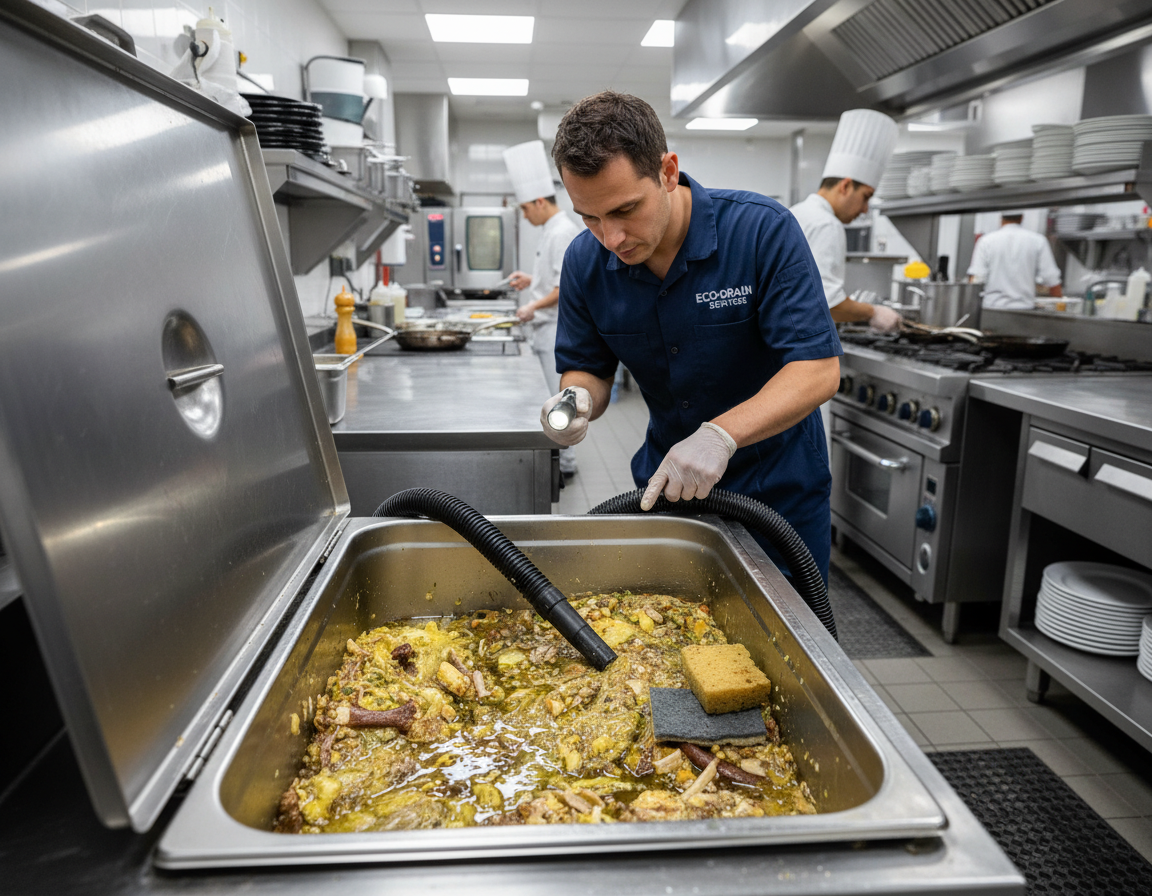
Next, we deploy our specialized vacuum truck. Its high-powered equipment removes all contents from the chamber. This removes floating fats, wastewater, and settled solids. The result is an completely empty interceptor.

Pumping alone isn’t enough. Our team then manually scrapes the interior baffles clean. This essential trap cleaning step removes hardened residue that the vacuum cannot remove. It prepares the surface for a deep wash.

Pressure Cleaning And Final System Check

A true professional cleaning depends heavily on high-pressure washing. Our team washes every interior wall and the floor of the chamber. This removes all traces of grease and harmful biofilm. The chamber is left sanitized and free of odors.

We then carry out an important final inspection. All inlet and outlet pipes are checked for hidden clogs. We also inspect the structure for cracks and signs of wear. Confirming structural integrity is critical for long-term operation.

The last step is refilling the unit with clean water to the proper level. This helps ensure the system works perfectly the moment service is complete.

For standard units, the full grease trap cleaning process generally takes 30 to 90 minutes. We are trained to work around your schedule as smoothly as possible.

We cause minimal disruption to your kitchen’s flow. Once the job is complete, you receive full documentation showing your system is compliant and ready.

Choosing expert trap cleaning means your equipment will works perfectly. It’s the reliable result you expect from a dedicated local service.

Choose Grease Cleaning Pros to carry out this detailed process correctly. Every service call is designed to work around your schedule and help protect your operation.

Understanding And Maintaining Grease Interceptors

When a kitchen’s output demands a more substantial waste containment system, a grease interceptor becomes the essential backbone. These larger systems are crucial for kitchens producing a high daily volume of cooking byproducts.

Maintaining these systems properly is specialized work. It requires the right knowledge and heavy-duty equipment to do the job correctly.

What Exactly Is A Grease Interceptor?

You can think of a grease interceptor as the large-scale, usually underground version of the under-sink grease trap. A typical trap may only hold 50 gallons, but an interceptor can range from 500 to 5,000 gallons in capacity.

These systems are intended for entire buildings or high-output establishments. Local steakhouses, hotels, and food courts often rely on this type of system.

These grease interceptors are vital for managing significant pomona grease output. They help stop fats and oils from reaching municipal sewer lines.

A trap interceptor functions by slowing the movement of wastewater. That allows fats to cool, solidify, and rise to the top where they separate from water.

That process protects shared plumbing infrastructure throughout the community. This is one of the first protections in place for the environment we all share.

The Specialized Cleaning Process Large Interceptors Require

Servicing these massive units is not something to handle without professional help. This type of work requires heavy equipment and certified expertise.

Service begins with accessing large concrete vaults or metal tanks. Technicians have to safely remove heavy manhole covers to access the unit.

An industrial-capacity pump truck is then deployed. It removes thousands of gallons of accumulated waste, water, and solids.

The interior has multiple compartments or baffles. Every chamber must be thoroughly scraped and pressure washed.

A full inspection is a critical part of the process. Experts check inlet and outlet tees, flow control devices, and the structure for cracks.

They also check for possible groundwater infiltration. This helps confirm the unit remains sound and helps prevent environmental problems.

This level of professional maintenance is why these systems need professional service teams. It goes far beyond a simple pump-out.

Despite regular cleaning in the kitchen, interceptors fill up on a predictable schedule. In many cases, service is needed every three months.

The busiest kitchens, however, might need monthly attention. At that level of use, a standard service schedule may not be enough.

Following a strict regular cleaning schedule is non-negotiable. It prevents catastrophic system failures that can shut down operations.

Even more importantly, it helps stop major environmental contamination. The remediation costs for such an event are extraordinarily high.

Partnering with a local expert ensures this professional maintenance is handled safely and compliantly. They have the right tools and know-how for your large grease trap interceptor.

Maintaining your grease interceptors properly is an investment in both business continuity and community well-being. It is a responsibility best handled by dedicated specialists.

Used Cooking Oil Pickup And Responsible Recycling

Beyond the fryer basket, the oil you’ve finished using presents a critical choice. Responsible recycling transforms a messy liability into something valuable. Improper disposal, on the other hand, can create expensive plumbing emergencies.

This golden liquid is much more than simple waste. When handled correctly, it fuels a positive cycle for your business and the environment.

A dedicated pickup partner can completely change this process. You gain a dependable pickup solution along with potential financial returns.

Prevent Plumbing Disasters And Earn Rebates

Dumping used cooking oil down the drain is one of the top causes of blockages. As it cools, it hardens inside the pipes. That creates a stubborn blockage that can back up your whole kitchen.

These backups lead to emergency calls, lost revenue, and severe fines. The cost of fixing a major sewer line break can be astronomical.

A scheduled pickup program eliminates this risk entirely. Our team provides sealed containers for your cooking oil waste.

Our team collects it on a schedule that matches your output. This protects your drains while helping your operation run without interruption.

There is also another benefit to this service: rebate opportunities. The collected used cooking oil has real market value.

Many restaurants receive credits or payments based on how much they recycle. It turns a potential problem into a modest revenue stream.

This proactive approach is a win-win. You protect your plumbing and put money back into your business.

From Fryer Waste To Renewable Fuel: The Recycling Process

The recycling journey of your cooking oil is impressive. Once our team collects it, the oil is transported to a processing center.

There, it undergoes thorough filtration to remove food particles and water. This purification stage is essential to create a clean base product.

The purified oil then goes through a chemical process known as transesterification. This transforms it into biodiesel, a clean-burning renewable fuel.

This biodiesel powers trucks, heavy machinery, and even heating systems. Your kitchen’s waste directly reduces reliance on fossil fuels.

The environmental impact is significant. Compared with traditional diesel, biodiesel can cut greenhouse gas emissions by up to 85%.

Furthermore, every single gallon of used cooking oil recycled prevents the contamination of roughly one million gallons of water. That helps protect local rivers and watersheds.

By choosing recycling, your kitchen contributes to a cleaner community. It’s a powerful example of a circular economy in action.

Some kitchens attempt a quick fix for slow drains by pouring hot water down the line. That only melts grease temporarily.

The liquefied grease simply moves farther down your pipes. After that, it cools and hardens into an even larger and more solid clog.

When pipes are already burdened by years of buildup, a stronger solution is needed. That is where hydro jetting becomes essential.

Hydro jetting blasts years of built-up grease, sludge, and debris. It works by using a concentrated water stream at pressures up to 4000 PSI.

This powerful force scours the interior walls of pipes completely clean. This method is highly effective and works without harsh chemicals.

When drains are consistently slow, you may need hydro jetting. It is the most reliable solution for restoring full flow.

Using a few best practices helps maximize your results:

  • Always use designated, leak-proof containers for used cooking oil storage.
  • Use strainer baskets in sinks so food solids are caught before entering drains.
  • Never dump fat or cooking oil into any drain, including floor drains.
  • Partner with a certified recycler to ensure proper handling and documentation.

Want to protect your plumbing and take advantage of rebate opportunities? Get your quote from our local team today. We’ll design a pickup schedule that turns your pomona grease output into a community resource.

Book Your Pomona Grease Trap Service Today

The date of your last service is more important than it may seem. It is a direct sign of your business’s health and safety.

Take a look at your records now. When the last entry is missing or older than 90 days, your grease trap should be considered overdue. Don’t wait for warning signs like bad smells or backed-up sinks.

Proactive professional cleaning is the most cost-effective strategy for your kitchen. It protects your Pomona restaurant from fines and shutdowns.

Setting up service with Grease Cleaning Pros is easy. We work around your hours and complete every trap cleaning job quickly. When we leave, your system is ready and works perfectly.

Our service includes crucial documentation. This satisfies health inspector requirements with ease.

Ready to enjoy peace of mind? Get your quote today from our friendly team today. We’ll design a regular maintenance schedule tailored to your kitchen.

You need professional care for your pomona grease trap. Let our team serve as your dependable local partner for all grease trap cleaning needs. Get quote now and protect your operation today.

Related: Affordable Options for Grease Trap Cleaning in Burbank

Affordable Options for Grease Trap Cleaning in Burbank

Grease Cleaning Pros In Burbank proudly delivers high-quality grease trap cleaning and pumping services. We serve restaurants, cafes, and commercial kitchens in Burbank. We aim for efficient, reliable service to ensure kitchens remain sanitary and operations continue smoothly.

Explore more about Grease Cleaning Pros in Burbank

Visit website of Grease Cleaning Pros in Calabasas

Explore more about Grease Cleaning Pros in Canoga Park

We cater to both small and large-capacity grease needs. Our Burbank grease solutions cover routine maintenance, emergency pumping, and full interceptor service. These are designed to prevent backups and maintain health code compliance.

For a quick, free quote, call 708-328-5059 for Burbank, IL, or 626-642-5622 for Burbank, CA. Count on Grease Cleaning Pros In Burbank for dependable grease trap and interceptor services. That service helps safeguard your kitchen and reputation.

Why Professional Grease Trap Services Matter For Burbank Businesses

A clean kitchen requires more than simply washing dishes. Routine grease trap maintenance and Grease Trap Pumping support public health and help businesses stay open. Local companies like Grease Cleaning Pros In Burbank provide scheduled service that fits busy operating schedules.

Health And Code Compliance

Routine maintenance helps prevent fats, oils, and grease buildup, reducing the risk of health code violations. Maintaining detailed service records makes inspections easier. Certified teams adhere to local and state sanitary codes during grease interceptor maintenance.

Preventing Sewer Backups And Costly Repairs

Clogged lines can cause backups, halting service and leading to expensive repairs. Timely maintenance removes solids and scum before they solidify in pipes. Regular Grease Trap Pumping helps extend the life of both traps and sewer lines and can reduce long-term costs.

Operational Continuity And Odor Control

Bad smells and sluggish drains can create problems for customers and employees alike. Routine grease interceptor maintenance reduces odors and cuts down on emergency service calls. Grease Cleaning Pros In Burbank provides flexible scheduling and fast response so restaurants, hotels, schools, and processing plants can operate without interruption.

Key Benefit What professional service includes Result for business
Health and code compliance Regular cleaning, documentation, and certified disposal Fewer violations, easier inspections, and better public safety
Backup prevention Grease Trap Pumping plus line checks Reduced repair costs, less downtime, and longer equipment life
Odor control and hygiene Internal cleaning, deodorizing, and scheduled maintenance Improved customer experience, healthier work environment
Flexible operations After-hours service and emergency response Less service disruption and faster recovery from incidents
Environmental compliance Correct waste transport and disposal records Meets state and local rules, avoids fines and shutdowns

Grease Cleaning Pros in Burbank

Grease Cleaning Pros In Burbank

Grease Cleaning Pros In Burbank serves restaurants and large commercial kitchens with dependable maintenance services. Their quality-focused service keeps kitchens efficient, reduces odors, and helps avoid expensive backups. Their flexible scheduling and experienced technicians aim to minimize disruption during peak service hours.

Company Overview And Service Standards

Grease Cleaning Pros In Burbank is a seasoned company operating in Burbank, IL, and Burbank, CA. The technicians use reliable methods to remove solids, fats, oil, and grease. They promise punctual service, thorough cleaning, and detailed reporting after each visit.

Core Services Offered

The team provides scheduled grease trap pumping and interceptor cleaning to prevent clogs and unpleasant odors. Emergency grease trap cleaning is also available for urgent issues. Regular maintenance programs help reduce long-term costs and extend equipment life.

Services include waste removal, detailed interior scraping, and proper disposal in line with local regulations. Small cafés and large kitchens alike receive the same careful attention and service quality.

Service Area And Contact Details

They serve Burbank businesses in both Illinois and California and provide quick response times for same-day needs. To get a fast free quote, call 708-328-5059 for Burbank, IL, or 626-642-5622 for Burbank, CA. Staff can arrange follow-up visits and ongoing maintenance plans tailored to each facility’s needs.

Grease Trap Pumping And Interceptor Cleaning Overview

Understanding grease removal is key to maintaining kitchen compliance and efficiency. Grease Trap Pumping and interceptor cleaning help restore capacity, reduce odor risks, and prevent fats, oils, and grease (FOG) from reaching the drains. Grease Cleaning Pros In Burbank uses on-site assessments to recommend the right pumping frequency for each location.

What is grease trap pumping?

Grease trap pumping involves removing accumulated grease, food solids, and wastewater from under-sink or in-ground traps. This is done using vacuum trucks or pump equipment. The process clears the unit, allowing it to capture FOG again and prevent discharge into municipal sewers.

Differences between grease traps and grease interceptors

Grease traps are compact units typically placed inside or near kitchens for low-flow applications. Interceptors, on the other hand, are larger and often installed outdoors or underground. They are designed for high-volume sites like large restaurants or food processing plants.

The scale of interceptor pumping is much greater. Because interceptors contain more FOG and solids, they need heavier equipment and more extensive cleaning steps. This is necessary to meet health and plumbing codes.

How often pumping should be scheduled

The required pumping frequency varies according to facility size, FOG output, and local regulations. Many food-service businesses require monthly to quarterly service. High-volume kitchens and larger interceptors often require shorter service intervals and closer monitoring.

Grease Cleaning Pros In Burbank uses inspections to create a customized service schedule. That schedule is matched to usage and compliance needs, helping managers avoid backups and fines.

Services Tailored To Industries In Burbank

Grease Cleaning Pros In Burbank offers customized services for local businesses. Different sectors generate grease differently, so service plans vary by industry. Scheduling, equipment, and reporting requirements are all considered in these plans. The objective is to help kitchens stay compliant while keeping operations smooth and efficient.

Restaurants, Cafes, And Fast Food Chains

High-volume kitchens generate significant amounts of fats, oils, and grease. This can result in clogged drains and health code violations. Regular pumping of grease traps prevents these issues and provides necessary documentation for inspections. Technicians offer emergency services and flexible scheduling to minimize disruptions.

Commercial Kitchens, Hotels, And Hospitality Operations

Hotels and large hospitality operations need robust grease interceptor cleaning and maintenance. Grease Cleaning Pros In Burbank handles these needs with routine checks and thorough cleaning. Their services support the continuous operation of resorts, banquet halls, and catering venues.

Food Processing Plants, Schools, And Institutional Foodservice

Facilities with high-volume production face stringent environmental and health regulations. Institutional kitchen maintenance includes removing heavy solids, capturing grease, and disposing of waste properly. These teams coordinate with school districts, university dining services, and food manufacturers to stay within those standards.

Special events, military bases, and temporary catering setups are also covered by these services. Customized plans combine commercial kitchen grease cleaning, scheduled pumping, and targeted maintenance. This approach adapts to the diverse needs of different sectors.

What Happens During A Professional Grease Service Visit

When the Grease Cleaning Pros In Burbank crew arrives, they begin with a detailed inspection and planning process. They conduct a grease trap inspection to assess buildup, examine baffles and seals, and measure solid levels. This step helps determine if a standard pump or a more intensive clean is needed.

Based on that assessment, technicians choose the right equipment for the job. A vacuum truck is used when significant buildup is present. For smaller, tighter spaces, a portable pump and hand tools are employed. Throughout the process, safety gear and containment measures help protect employees and the kitchen area.

The core of the visit is grease trap pumping. The crew removes grease and solids, and if needed, scrapes and washes the trap walls. Debris is also cleared from inlet and outlet lines so proper flow is maintained and backups are prevented.

Waste removal is done with strict adherence to regulations. Collected waste is transported to licensed facilities to meet waste disposal standards. The team records volumes and disposals to meet local health and environmental regulations.

After service is completed, you receive a detailed report. It lists the volumes removed, the service date, and any recommended repairs. This documentation supports regulatory recordkeeping and helps during permit inspections.

Grease Cleaning Pros In Burbank offers follow-up scheduling and maintenance plans. Regular visits and emergency response options minimize downtime and ensure your kitchen operates efficiently.

Choosing Grease Cleaning Pros: Pricing, Reliability, And Guarantees

Choosing the right service team is critical for uptime, compliance, and long-term cost control. Grease Cleaning Pros In Burbank offers clear service options. This helps managers plan maintenance with confidence. Below are the main points to consider when choosing a provider for routine Grease Trap Pumping and emergency response.

Transparent Service Pricing And Free Quotes

Understanding costs upfront makes maintenance budgeting easier. Grease Cleaning Pros In Burbank provides transparent grease service pricing and a free grease trap quote. A quote can be obtained either by phone or through an on-site visit. Pricing tiers include routine pumping, deep cleaning, and interceptor work so businesses can compare options.

Experienced Technicians And Scheduling Flexibility

Experienced staff helps reduce downtime and protect equipment life. The crew includes experienced grease technicians who service both small traps and large interceptors with the same level of care. Service can be scheduled flexibly to avoid peak operating hours. When blockages threaten operations, emergency response service is available.

Environmental Compliance And Disposal Guarantees

Proper waste handling keeps permits intact and avoids fines. Grease Cleaning Pros In Burbank documents disposal compliance for each job. Pumped waste is transported to permitted disposal facilities. Clients receive service certification and records that support inspections and local reporting.

Offered Service What Is Included Benefit
Routine Grease Trap Pumping Scheduled pump-outs, basic cleaning, service log Reduces backups, extends equipment life
Deep Cleaning And Interceptor Service Full scrape, degreasing, inspection report Better flow and earlier repair detection
Emergency Response Rapid dispatch, on-site repairs, and temporary measures Minimizes downtime during critical events
Compliance paperwork Disposal manifests, certifications, and maintenance records Supports audits and local regulatory needs

Conclusion

Routine grease trap pumping and scheduled grease interceptor maintenance are essential for maintaining strong commercial kitchen sanitation standards. That routine helps prevent costly plumbing problems. Professional service helps restaurants, hotels, schools, and food processors in Burbank maintain health code compliance. They also prevent sewer backups and control persistent odors that disrupt operations.

Dependable grease trap cleaning and interceptor pumping are provided by Grease Cleaning Pros In Burbank. They provide compliant waste disposal, free quotes, and flexible scheduling tailored to each facility. Their approach supports both daily kitchen function and long-term equipment protection. That reduces repair expenses while lowering environmental risk.

Protect your business by scheduling grease service now and making routine inspections part of your maintenance plan. For a free quote, call 708-328-5059 in Burbank, IL, or 626-642-5622 in Burbank, CA. Set up tailored grease trap pumping and grease interceptor maintenance to keep your commercial kitchen sanitation plan on track.

Related: Why Quality Matters for Grease Trap Cleaning in Pomona

Grease Cleaning Pros in Canyon Country: Eco-Conscious Cleaning Practices

Grease Cleaning Pros In Canyon Country supports restaurants, hotels, caterers, and other food-service businesses in the Santa Clarita area. Our team is committed to delivering dependable, efficient, and compliant grease trap service. We manage everything from routine pumping to urgent response calls.

Discover more about Grease Cleaning Pros in Canyon Country

More information about Grease Cleaning Pros in Stevenson Ranch

Website about Grease Cleaning Pros in Castaic

We provide a broad range of commercial kitchen grease cleaning services. These services include grease removal, pressure washing, hot-water power washing, and oil stain removal for driveways and sidewalks. We also provide plumbing and drain maintenance as part of our services.

Canyon Country sees substantial restaurant traffic, resulting in major grease accumulation on paved surfaces. That accumulation can clog drains and create issues with local ordinance compliance. With fast local response and skilled technicians, we support compliance, environmental responsibility, and smooth operations.

The next sections outline the value of professional grease trap pumping and commercial kitchen grease cleaning. We will outline the services Grease Cleaning Pros offers. You will also see how our team upholds regulatory and environmental standards while helping protect your operations.

Why Professional Grease Trap Service Matters For Canyon Country Businesses

Proper grease control is essential for maintaining a clean kitchen and smooth day-to-day operations. Restaurants and catering companies in Canyon Country depend on regular grease trap pumping and maintenance. This helps prevent slow drains, unpleasant odors, and compliance problems.

Health, Safety, And Compliance Requirements

Regular maintenance reduces the accumulation of fats, oils, and grease. Such buildup can result in unhealthy and unsanitary conditions. Certified technicians use specialized equipment to remove grease while reducing odors and bacterial growth. Keeping detailed service records helps businesses meet inspection standards, avoiding fines or forced closures.

Operational Continuity And Cost Savings

Clogged traps and obstructed drains can disrupt operations and require urgent repairs. Routine pumping helps prevent these issues, protects plumbing, and avoids expensive sewer-line repairs. It also helps preserve concrete and paved surfaces by removing oil stains that may break down materials over time.

Environmental Care And Proper Disposal

Licensed providers ensure waste is collected and treated or recycled according to environmental regulations. This prevents illegal dumping and protects storm drains and local waterways. Targeted detergents combined with hot-water power washing help reduce chemical use and improve cleaning efficiency.

Grease Cleaning Pros in Canyon Country

Key Benefit What professional service includes Business advantage
Sanitation Health-focused grease removal, odor reduction, and documentation Supports inspections while protecting staff and customers
Operational Reliability Planned grease trap pumping and regular maintenance Minimize downtime and avoid emergency repairs
Cost Management Preventative cleaning extends equipment life Reduce long-term repair and replacement costs
Environmental Compliance Grease disposal and hauling to approved facilities in compliance with environmental rules Avoid fines, protect local waterways

About Grease Cleaning Pros In Canyon Country

Grease Cleaning Pros caters to Canyon Country and the surrounding Santa Clarita areas. Their focus is on prompt grease trap pumping and ongoing maintenance. This ensures that food-service businesses remain compliant and operations run smoothly. Their local expertise and quick response times are invaluable to restaurants, hotels, and catering facilities.

About Our Company

Grease Cleaning Pros is dedicated to serving the community with commercial grease cleaning services. Their mission is to offer reliable grease trap pumping, safe waste handling, and thorough cleaning that meets health standards. Fast scheduling, clear estimates, and respectful on-site service are priorities that help minimize disruptions.

Primary Services Available

Routine grease trap pumping and scheduled maintenance help prevent backups by removing FOG and solids. Consistent maintenance helps restaurants avoid fines and emergency repair costs.

Pressure washing and concrete surface cleaning remove oil, tire marks, and grime from driveways, sidewalks, and other paved areas. Hot-water power washing works better than cold-pressure methods for heavy grease, mildew, rust, and chewing gum.

Drain cleaning and water jetting remove clogs and help prevent backups. Camera inspections diagnose pipe conditions, ensuring targeted repairs.

Grease waste is collected, hauled, and disposed of according to environmental requirements. That protects storm drains while lowering liability risk.

Standards And Qualifications

Licensed grease trap technicians arrive in clean uniforms, offer upfront estimates, and maintain accurate service records. They are trained to industry standards and know how to operate a variety of cleaning equipment.

They are known for punctuality, wearing shoe coverings indoors when necessary, and using eco-friendly detergents. Methods are chosen based on site evaluation so the proper technique is used for each surface and soil type.

Service What the service does Business benefit
Grease interceptor pumping Removes fats, oils, grease, and solids from in-ground or interceptor traps Reduces backups and odors, prevents blockages, and helps avoid fines
Exterior pressure washing Uses cold-water cleaning on concrete and paved surfaces Improves curb appeal while removing grime and allergens
Hot-water washing Heated cleaning for severe grease, rust, and set-in staining Removes stubborn soils faster and offers a better sanitizing effect
Drain cleaning & water jetting Clears blockages, while jetting removes roots and grease Cuts emergency calls and helps extend pipe life
Pipe camera inspection Provides a visual diagnosis of pipe condition Helps target repairs and avoid unnecessary digging
Waste collection & disposal Transportation and environmentally compliant grease disposal Supports local compliance and reduces environmental risk

How Grease Trap Pumping And Advanced Cleaning Methods Work

Keeping kitchens running smoothly and sewers clear is essential. Grease trap pumping in Canyon Country removes fats, oils, and grease before they cause backups. Technicians follow a routine to empty, clean, and measure grease layers. This sets a pumping schedule that fits each operation’s needs.

What Grease Trap Pumping Is

Grease trap pumping involves mechanically removing built-up FOG and solids from traps and interceptors. The crew opens the unit, removes surface grease, and vacuums out solids responsible for blockages.

Once removal is complete, technicians clean the trap walls and baffles and document grease depth. Proper disposal sends the waste to authorized processing or recycling facilities in compliance with local environmental rules.

When To Use Pressure Washing Or Hot-Water Power Washing

The choice between pressure washing and power washing depends on the stain and surface. Cold-pressure cleaning is effective for dirt, gum, and light oil on sidewalks or driveways. It clears grime without heat.

Hot-water power washing is best for heavy grease and baked-on soil. Heated water dissolves stubborn fats and kills mildew, making it ideal for commercial kitchen exteriors and heavily soiled pavement.

Professionals evaluate surface type, stain composition, and runoff rules. They select eco-friendly detergents and pressure settings that protect concrete, asphalt, and finishes.

Additional Plumbing Services

Drain cleaning helps restore flow when grease or debris blocks the lines. Technicians use mechanical snaking for simple blockages and water jetting for grease that adheres to pipe walls.

Video camera inspections can reveal hidden buildup, fractures, and root intrusion. Scheduled maintenance reduces emergency repairs and limits mold and bacteria growth inside pipes.

Staff training helps prevention. Basic steps like collecting cooking oil for proper disposal help reduce repeat problems and lengthen the life of traps and lines.

Service Best used for Typical tools Typical frequency
Grease trap pumping Built-up FOG and solids in interceptors Skimmers, vacuum trucks, and hand tools Monthly to quarterly, site-dependent
Exterior pressure cleaning General grime, light dirt, and gum on exterior surfaces Cold-water pressure washers and surface cleaners As needed or scheduled maintenance
Heated power washing Heavy grease, stubborn grime, and mildew Heated washers with eco detergents Periodic deep cleaning for high-traffic areas
Drain line cleaning Grease clogs, food particles, and solids Snakes, augers, water jetting rigs When flow is reduced or on preventive schedule
Water jetting Heavy grease accumulation inside pipe walls High-pressure water jet units, reels Used seasonally or within preventive maintenance programs
Video inspection Hidden blockages, pipe damage, grease pockets HD sewer cameras and locators Post-cleaning verification or as-needed diagnostics

How To Choose The Right Grease Trap Service In Canyon Country

Picking a reliable grease trap service is vital for keeping kitchens compliant and efficient. Grease Cleaning Pros In Canyon Country stand out because of their local expertise, transparent pricing, and prompt service. They cater to the needs of busy restaurants and caterers.

Look for companies with testimonials from businesses in Canyon Country and Santa Clarita. Case studies and verified reviews often show timely service and satisfied commercial customers. Local crews are familiar with municipal regulations and can respond quickly when time is critical.

Transparent Pricing And Maintenance Plans

Ask for detailed estimates that explain grease trap pumping costs, service frequency, cleaning scope, and disposal fees. A regular maintenance plan for your grease trap, whether monthly or quarterly, helps manage expenses and minimizes emergency calls. Inquire about any promotional offers and any service limitations that might affect your experience.

Licensing, Insurance, And Environmental Compliance

Make sure the service provider is a licensed grease trap company with certified technicians and proper insurance. They should follow state and local waste management laws and provide documentation for inspections. Service reports and certificates are important for protecting your business during compliance audits.

Emergency Service And Fast Response

Select providers that can deliver fast emergency grease service for problems such as overflows, backups, and clogged drains. Confirm their expected response times, communication methods, and workmanship guarantees before hiring them. They should offer bundled services, including power washing, camera inspections, and drain cleaning, to efficiently resolve problems and reduce downtime.

Closing Summary

A clean grease system is vital for restaurants and commercial kitchens in Canyon Country. Grease Cleaning Pros In Canyon Country offer expert services. They ensure health safety, meet local regulations, and prevent costly downtime.

Their services include routine grease trap pumping, pressure washing, and related cleaning solutions. They also handle hot-water power washing for tough buildup, drain cleaning, water jetting, and camera inspections. Responsible grease waste disposal is also included, helping ensure environmental compliance for all businesses.

Choose a provider with a strong local reputation and transparent pricing. Confirm they carry proper licensing and insurance while offering quick emergency response. If you need dependable grease cleaning in Canyon Country, contact Grease Cleaning Pros In Canyon Country. Schedule a grease trap inspection or set up a maintenance plan to safeguard your operations and extend paved surface life.

Related: Affordable Options for Grease Trap Cleaning in Burbank

How Grease Trap Repair Supports Stevenson Ranch’s Smart City Initiatives

Surprisingly, clogged grease drives about close to 40% of sewer line blockages in some U.S. cities. Just one failed grease interceptor can cripple a kitchen and bring steep fines overnight. This guide is for business owners and facility managers in the United States. It breaks down grease trap replacement: when to move, what you’ll pay, and how to keep kitchens compliant and odor-free. Grease traps (grease interceptors) separate fats, oils, and grease (FOG) from kitchen wastewater. This protection reduces sewer backups and environmental contamination.

Check Out Grease Trap Pumping
Continue Reading About Grease Trap Pumping
Discover More About Grease Trap Cleaning

You’ll learn practical signs that replacement is due. You’ll also understand when a repair is enough versus a full replacement. Correct grease trap installation and ongoing maintenance extend service life.

Timely replacement preserves operations, avoids health-code penalties, and prevents bacterial growth and foul odors. Left unchecked, these issues can hurt your reputation and even property value. Using a professional installer like Grease Cleaning Pros ensures proper sizing, efficient installation, regulatory compliance, and post-job staff training. This is critical for restaurant grease trap replacement, where downtime hits revenue.

The article ahead covers when to replace, replacement versus repair, cost estimation and financing, installation best practices and permits, maintenance routines, commercial-scale upgrades, and how to choose a qualified contractor for grease trap installation and upkeep.

Grease Trap Cleaning & Pumping

Key Highlights

  • Grease traps protect sewer systems by capturing FOG before it enters pipes.
  • Timely grease trap replacement prevents fines, odors, and costly emergency repairs.
  • Professional services such as Grease Cleaning Pros help ensure proper sizing and compliance.
  • Plan for replacement when clogs, odors, or failed inspections become routine.
  • Proper installation paired with consistent maintenance lowers long-term costs.

When To Consider Grease Trap Replacement

Deciding on a grease trap replacement means spotting key symptoms and reviewing your service history. Kitchens with high traffic or newly added equipment may need a bigger interceptor. Finding problems early reduces costs and prevents disruptive downtime.

Common warning signs

Bad odors near drains or throughout the kitchen often point to trapped FOG and bacterial growth. If drains run slowly or sinks empty sluggishly, that can indicate partial blockages. Grease backing up into sinks or floor drains is a sign solids are surfacing and the risk is urgent.

Look for visible damage such as cracks, corrosion, or leaks at joints and seals. Rust on metal often indicates structural failure. If clogs keep returning or pumping is needed too often, even after cleaning, the unit may be nearing end of life.

Inspection and assessment steps

A grease trap inspection starts with a visual check of access covers, baffles, and piping. Techs measure grease/solids layer depth and look for corrosion, cracks, and leaks. Service logs are reviewed—maintenance dates, pumping frequency, and repair notes included.

Then, flow and capacity are evaluated. Comparing current output to the trap’s rated capacity shows if it’s undersized. Pros may use scopes, cameras, and depth gauges to confirm internal condition. Companies such as Grease Cleaning Pros advise repair vs. replacement based on age, structural integrity, and performance.

Costs of delaying replacement

Waiting to replace increases the chance of full sewer backups, emergency plumbing costs, and health-department fines. These can force temporary closures. Minor temporary fixes often turn into recurring expenses that exceed the cost of a new installation.

Business disruption from emergency repairs hurts service and revenue. Environmental penalties and liability risks rise if FOG enters municipal systems. Examples show that proactive maintenance plus timely replacement lowers emergency calls and long-term repair costs.

Warning Sign or Issue Short-Term Step Long-Term Recommendation Path
Persistent odors Schedule grease trap cleaning and odor treatment Complete a grease trap inspection; plan replacement if it continues
Slow drainage Remove blockages and monitor drainage Check capacity; consider a larger unit or replacement
Visible backups into drains Pump immediately and clean up Inspect for damage; replace if it keeps happening
Cracks or corrosion Control leaks and limit system use Replace to avoid structural failure and fines
Repeated clogs after cleaning Increase cleaning frequency temporarily Evaluate repair vs. replacement with Grease Cleaning Pros

Grease Trap Replacement Guide

Choosing between repair and replacement hinges on a thorough evaluation. Factors such as age, damage, and service history are critical. Often, opting for replacement over repair can lead to significant long-term savings. This is due to the prevention of recurring failures and downtime.

Replacement Versus Repair Decision Factors

Age is a significant factor. Units older than ten years often show corrosion and wear that impacts reliability.

The severity of damage is another key factor. Cracks, leaks, collapsed components, or severe corrosion often means replacement is the safer choice, not repair.

Failure frequency matters too. If clogs and service calls keep happening, replacement is often necessary for consistent flow.

Conduct a cost analysis. Compare the cumulative cost of repairs to the upfront cost of replacement, including lower maintenance costs over time.

Verify the trap’s capacity fits your current operations. If the trap is undersized, overflows and code violations follow, often making replacement necessary.

Types Of Grease Trap Replacement Solutions

Passive grease traps are simple and budget-friendly. They are suitable for low-volume kitchens but require more frequent cleaning.

Automatic Grease Removal Units (AGRUs) mechanically skim and remove grease. They’re ideal for high-volume kitchens, reducing manual labor and keeping waste lines cleaner.

Grease interceptors, including large in-ground units, are necessary for restaurants and institutions with high flow rates. Local codes often require them for larger operations.

Biodigesters and biological additives help break down FOG, extending time between cleanings when used with physical traps.

Material choice affects cost and lifespan. Options include concrete interceptors, stainless steel, and polyethylene, each with different durability and installation needs.

Typical Grease Trap Replacement Workflow

To start, a technician assesses the site and delivers a detailed quote. Grease Cleaning Pros offers clear options with transparent pricing.

Next, select the appropriate trap type, material, and capacity based on kitchen volume, appliances, and local regulations.

After that, secure any required permits and schedule the job to minimize kitchen downtime.

Take out the existing unit, pump out waste, and prepare the site as needed.

Install the new unit, connect piping, and ensure proper slope and venting.

Test the system, checking for leaks and verifying flow rates and grease separation performance.

Provide staff training, maintenance schedules, and log templates. Grease Cleaning Pros emphasizes the importance of post-installation training and follow-up planning.

Estimating Grease Trap Replacement Costs & Financing Options

Replacing a grease trap is more than just the cost of the unit. You need to understand total cost: equipment, labor, disposal, permits, and ongoing service. Grease Cleaning Pros recommends getting detailed estimates to compare upfront cost versus long-term value.

Key cost drivers

The size and rated GPM of the unit significantly impact the cost. Larger units often need additional equipment and labor, increasing total cost. Material choice matters too, with concrete and AGRU systems often costing more than plastic or stainless units.

Installation complexity also impacts pricing. If the job requires excavation, plumbing reroutes, or tight-space work, labor costs can rise. Local permits and inspections add to the expense and schedule.

Waste removal is a key cost driver. Proper disposal of fats, oils, and grease (FOG) must be considered. Access challenges can increase both pumping and installation costs.

Typical price ranges

For low-flow kitchens, small passive replacements commonly cost $1,500–$3,000 including basic installation. Many mid-range units and underground interceptors typically cost $3,000–$7,000 depending on material and site conditions.

Large-capacity interceptors or AGRU installs for high-volume kitchens often start around $5,000 and can exceed $10,000 with excavation and major site work. Installation-only services may be several hundred to several thousand dollars.

Plan for recurrent costs. High-volume kitchens may require pump-outs every 1–3 months. Grease trap pumping rates vary by region and provider.

Financing and budgeting approaches

Ask for transparent, itemized quotes from contractors like Grease Cleaning Pros. Weigh lifetime operating costs against the upfront investment to choose wisely. Service contracts that include maintenance, pumping, and emergency response can help smooth out operating budgets.

Explore short-term financing, business lines of credit, or vendor payment plans for grease interceptor projects. Some suppliers provide phased payments to reduce cash-flow strain.

Keep records of maintenance, receipts, and permits. Strong documentation supports compliance and can help you chase rebates or incentives. Budgeting for routine care extends unit life and lowers total cost of ownership.

Cost Item Typical Cost Range In USD Notes And Details
Small passive unit + basic installation \$1,500–\$3,000 Suitable for low-flow kitchens; usually requires minimal site work
Mid-range interceptor, including underground options \$3,000 – \$7,000 Material and job complexity drive pricing; may require moderate excavation
Large interceptor or AGRU solution From \$5,000 up to \$10,000+ Designed for high-volume kitchens; concrete in-ground units usually cost more
Installation-only (labor, plumbing, permits) \$500 – \$4,000+ Pricing varies with access, plumbing reroutes, and local code requirements
Grease trap pumping (per service) \$100–\$500+ Frequency depends on kitchen volume; pricing varies regionally
Annual service contract About \$600 to \$3,000+ Often includes routine pumping, inspections, and priority response
Financing arrangements Varies by provider Vendor plans, business credit lines, and short-term loans may be available to finance grease interceptor projects

Grease Trap Installation Best Practices And Code Compliance

Proper installation is critical to long service life, strong performance, and compliance. Following established best practices helps prevent backups, fines, and expensive repairs.

Proper Sizing And Selection

Start by measuring peak wastewater flow and considering hours of operation and cooking equipment type. Use local codes to confirm the correct capacity. If the unit is too small, it can overflow fast.

Pick the right system for your facility. Passive traps are a fit for low-volume kitchens. For high-volume sites, consider an automatic grease removal unit or a commercial interceptor. Pick materials based on corrosion resistance and site requirements. Stainless steel and concrete are popular due to durability in commercial settings.

Installation Checklist

Start by assessing drain flow rates, structural capacity, and access for maintenance. Ensure existing FOG is safely removed and disposed of before installing the new unit.

  • Placement: ensure clearance around equipment and easy access for maintenance.
  • Piping and slope: install correct piping with proper slope, venting, and backflow prevention.
  • Seals and covers: install secure baffles, non-slip covers, gaskets, and seals to prevent leaks and odors.
  • Testing: perform pressure and water-run tests to verify leak-free connections and correct flow.
  • Documentation: record installation details and serial numbers. Provide a maintenance log template and basic staff training on operation and safety.

Local Regulations & Permitting

Many municipalities require grease interceptors and routine maintenance documentation. Health departments and public works departments enforce these rules to protect sewer systems.

Obtain necessary permits for new installations, in-ground interceptors, or major plumbing changes. Expect an inspection after installation. Ensure pumped grease is disposed of according to local waste-handling rules. Companies like Grease Cleaning Pros offer compliant removal and disposal services.

Maintain detailed service records and pumping logs to show compliance during inspections. Noncompliance with local regulations can lead to fines or shutdowns. Maintain solid documentation and follow best practices throughout.

Grease Trap Maintenance That Extends Lifespan

Keeping equipment in good condition helps prevent expensive repairs. Regular maintenance stops backups, cuts down on odor complaints, and extends the life of the grease trap. A straightforward plan that blends routine cleaning, good kitchen habits, and targeted treatments produces the best results.

Suggested Cleaning Schedule

Cleaning frequency varies with kitchen activity levels. Most places clean every 1–3 months. Busy restaurants often need monthly service, whereas smaller cafes and delis can usually manage quarterly cleanings.

Check the grease and solids layer regularly and schedule service before it hits maximum capacity. Hire a certified professional for thorough removal and compliant waste disposal. Grease Cleaning Pros suggests maintaining pumping schedules and logs to support inspections and waste manifests.

Daily Operational Best Practices

Train staff to scrape plates and collect oils/solids in designated containers. Never pour large amounts of oil down sinks. Use sink strainers and floor-drain screens to catch debris before it reaches the interceptor.

Avoid flushing with hot water, because it can liquefy grease and push it past the trap, causing blockages. Conduct short daily checks for odors, slow drains, or visible buildup. Log these findings for quick follow-up.

Using Biological Treatments And Monitoring

Biological grease treatments, like enzyme and bacterial products, help break down FOG. They may extend time between mechanical cleanings. Use these products as directed, often on a weekly schedule. Use them to supplement scheduled cleanings and pump-outs, not to replace them.

Create a monitoring routine: measure grease depth, log treatment dates, and track pumping schedules. Monitoring data helps fine-tune service intervals and reduces emergency calls, lowering yearly maintenance costs.

Commercial Considerations For Large Operations

Big restaurants, hotels, and food-production facilities face specialized grease-management needs. Upgrading equipment and service plans can reduce downtime. It ensures compliance with local ordinances and protects plumbing systems from costly backups.

Upgrading to heavy-duty interceptors or AGRUs is wise when peak flows exceed small-trap capacity. In-ground grease interceptors handle large volumes. Installing an AGRU adds automation, reduces manual labor, and helps keep kitchens running during peak shifts.

Upgrading To Commercial Interceptors Or AGRUs

Select materials for longevity: concrete interceptors fit rugged, high-volume sites. Stainless steel AGRUs provide reliable mechanics and faster access for service. Proper sizing lowers the frequency of pump-outs and meets municipal compliance requirements.

Maintenance Contracts & Emergency Response

Maintenance contracts provide scheduled pump-outs, inspections, documentation, and priority emergency response. Clear response-time commitments and fixed pricing for emergency calls reduce unexpected downtime. That helps keep operating costs predictable.

Grease Cleaning Pros and established third-party providers offer 24/7 emergency services. This support reduces business disruption and limits health hazards. Contracts should include service logs that support insurance claims and municipal inspections.

Case Study & Cost Savings Example

A busy bistro switched to monthly maintenance, staff training, and a correctly sized interceptor. The owner reduced plumbing service calls by 80%. That saved about $5,000 per year through reduced repairs and labor.

Spending more upfront on an AGRU install or a correctly sized interceptor often pays off. Benefits include fewer service calls, lower fines, and longer equipment life. Routine grease interceptor service plus a maintenance contract creates predictable budgeting and stronger operational resilience.

Choosing A Professional: Grease Cleaning Pros And What To Expect

Choosing Grease Cleaning Pros means getting access to trained technicians and full-service support for your commercial kitchen. They offer a range of services, including grease trap replacement, pumping, and repair, alongside regular cleaning. This experience helps minimize downtime and keeps your operations aligned with local FOG rules.

First, you’ll have an initial consultation to discuss trap size, location, and the last maintenance date. Then, technicians perform an on-site inspection. They’ll pump the grease trap, inspect for corrosion/leaks, and propose repair or replacement options. You’ll receive a detailed quote outlining costs for trap size, installation complexity, permits, and disposal.

A professional install typically includes removal of the old unit, site preparation, and installation of the new interceptor or AGRU. They handle piping, testing, and commissioning. Post-service, Grease Cleaning Pros supplies documentation, a maintenance plan, and training on daily habits that extend equipment life.

Expect 24/7 emergency response and compliant disposal of collected FOG. Optional maintenance contracts are available, including scheduled pump-outs and priority service. For restaurants and large operations facing frequent grease issues or regulatory risks, engaging Grease Cleaning Pros for an assessment and clear estimates is wise. That helps safeguard your business and lower long-term costs.

Related: How Grease Trap Cleaning Contributes to Claremont’s Green Initiatives

How Grease Trap Pumping Canyon Country Prevents Foul Odors in Your Business

Running a high-traffic commercial kitchen comes with its challenges, particularly when it comes to controlling fats, oils, and grease (FOG). If not addressed the right way, these substances can create unpleasant odors, overflows, and high-cost drain issues. This is where Grease Cleaning Pros comes in.

At Grease Cleaning Pros, we understand the specific challenges faced by restaurant owners and facility managers in maintaining their kitchen’s drain system. Our team offers professional grease trap cleaning and pumping services designed to reduce disruption and boost efficiency.

Visit Website Of Grease Trap Pumping
This Website Is For Grease Trap Cleaning
Explore More About Grease Trap Pumping

With years of hands-on experience, we provide end-to-end maintenance that reduce the risk of high-cost plumbing problems and ensure compliance with local health regulations. Learn how our customized solutions can help protect your business investment and maintain kitchen productivity.

Key Takeaways

  • Get expert grease trap cleaning and pumping for commercial kitchens.
  • Comprehensive maintenance to prevent costly plumbing emergencies.
  • Tailored maintenance helps keep kitchens efficient and compliant.
  • Dependable service delivered by experienced professionals.
  • Protect your business and safeguard your investment.

The Importance Of Professional Grease Trap Maintenance

Grease trap maintenance is more than a requirement—it’s a critical investment in operational efficiency and the long-term health of your plumbing infrastructure. Proactive maintenance helps avoid costly issues.

Without proper maintenance, grease traps can become overwhelmed with grease buildup, leading to sudden backups and health-code citations. Routine professional cleaning ensures that your grease trap operates at peak efficiency, effectively separating FOG from wastewater.

Beyond only reacting to problems, Grease Cleaning Pros emphasizes proactive servicing to help you reduce last-minute shutdowns and unexpected costs. Qualified technicians can also spot early warning signs before they become major repairs.

In short, professional maintenance keeps your system running at its best, helps you remain compliant, and reduces the chance of major blockages that can derail your kitchen’s workflow.

  • Professional grease trap maintenance is a core investment in your kitchen’s efficiency.
  • Skipping maintenance can cause backups and health-code violations.
  • We emphasize proactive service rather than last-minute emergency work.
  • Regular professional service keeps grease traps working at peak efficiency.
  • Experienced technicians spot early issues before they turn into big problems.

Grease Trap Cleaning

Understanding Grease Traps: How They Protect Your Plumbing

Grease traps are crucial for maintaining a reliable plumbing system in commercial kitchens. At Grease Cleaning Pros, we understand the importance of these devices in preventing costly plumbing issues. A grease trap is a plumbing device designed to capture fats, oils, and grease (FOG) from wastewater before it enters the sewer system.

By reducing the flow of wastewater, grease traps allow FOG to float to the top while solids settle at the bottom. The cleaner water then exits through an outlet pipe, keeping FOG out of the primary sewer line. This process protects your plumbing system and helps your business comply with local codes and regulations.

As these devices only capture FOG (they don’t dissolve it), the trap must be serviced regularly to keep separation working properly. When maintenance slips, FOG can move past into the plumbing line and create downstream blockages.

Types Of Grease Traps And Interceptors

There are multiple types of grease traps and interceptors available, catering to different kitchen sizes and needs. At Grease Cleaning Pros, we service all types, from compact under-sink units to large in-ground interceptors.

Type Description Typical Use
Small Under-sink Grease Trap Compact unit installed under the sink Small establishments, cafes
Large In-ground Interceptor Large unit installed outdoors High-volume restaurants, institutional kitchens

How Grease Separation Systems Work

Grease separation systems work by using gravity force to separate FOG from wastewater. The effectiveness of these systems directly impacts your business’s operational efficiency and compliance with local regulations. Routine service by professionals like Grease Cleaning Pros is essential to ensure optimal performance.

Understanding your grease trap’s exact type and rated capacity is crucial for determining the appropriate cleaning frequency and maintenance schedule. By maintaining your grease trap, you can prevent costly plumbing emergencies and ensure your kitchen operates smoothly.

Signs Your Commercial Kitchen Needs Grease Trap Cleaning

Recognizing the indicators that your grease trap needs cleaning can save your commercial kitchen from potential shutdowns. A grease trap that is not functioning correctly can lead to a range of problems, from unpleasant odors to serious backups.

Spotting problems early helps you prevent surprise shutdowns and protect your staff from emergency cleanup. If you notice any of the following symptoms, it’s time to take action.

Persistent Odors And Slow Drainage

One of the first signs of a grease trap issue is the presence of stubborn unpleasant odors wafting from drains or the trap area. Additionally, slow-draining sinks and floor drains throughout your kitchen signal that your grease trap may be approaching capacity.

Backups And Overflow Issues

When backups or overflow issues occur, prompt professional attention is required. These symptoms indicate that your trap has exceeded its capacity, with FOG occupying more than 30% of the trap volume.

When this happens, continuing to run the kitchen can push more waste into the line, increasing the likelihood of a costly emergency. Quick intervention helps keep the situation from escalating.

Structural Damage Indicators

Visible structural damage, such as corroded lids, cracked baffles, or worn seals, not only reduces the efficiency of your grease trap but can also lead to leaking, mess, and inspection failures. At Grease Cleaning Pros, we recommend scheduling an inspection at the first sign of these issues.

Comprehensive Grease Trap Cleaning & Pumping Services

At Grease Cleaning Pros, we specialize in thorough grease trap cleaning and pumping services designed to maintain your system’s best performance while ensuring compliance with local regulations.

From start to finish, our goal is to make grease trap service simple for busy kitchens. You get consistent scheduling, thorough work, and clear documentation that supports compliance.

Our Professional Cleaning Process

Our professional cleaning process begins with a thorough inspection of your grease trap system to assess its condition and determine the most effective cleaning approach based on the type and size of your trap. Using specialized equipment, our technicians completely evacuate all contents from your grease trap, including accumulated FOG, food solids, and wastewater.

Next, we clean key internal components—such as baffles and flow paths—so the system can separate properly after service. We also check for early wear and highlight any issues that could lead to failures if left unaddressed.

Customized Maintenance Schedules

Understanding that every kitchen operates differently, we develop customized maintenance schedules based on your specific needs, considering factors such as daily output, menu type, and local requirements. Our scheduling flexibility allows us to perform services during off-hours, minimizing disruption to your business operations.

With Grease Cleaning Pros, you can rely on our expertise to keep your grease trap in excellent condition. Our services include complete cleaning, pumping, and maintenance, all performed by trained technicians who prioritize environmental responsibility and adhere to local regulations.

The Environmental Impact Of Proper FOG Management

Proper management of fats, oils, and grease (FOG) plays a major role in safeguarding our environment. Grease Cleaning Pros is committed to environmentally responsible practices, ensuring that all collected FOG waste is properly transported and processed according to EPA guidelines and local regulations.

With proper FOG control, kitchens reduce the likelihood of blockages that can lead to spill events and pollution. Responsible service protects waterways and supports better outcomes for the community.

Preventing Water Contamination

When FOG enters the municipal sewer system, it can create massive “fatbergs” that block pipes, cause sewage overflows into natural waterways, and damage treatment facilities. Regular grease trap maintenance is crucial in preventing these issues and protecting our water resources.

Sustainable Disposal Practices

Our sustainable disposal methods include recycling collected grease for use in biodiesel production and other beneficial applications. This approach not only diverts waste from landfills but also creates valuable resources, contributing to a more circular economy.

We also emphasize correct containment and transport so waste ends up in approved channels, not dumped improperly. That means your kitchen stays compliant while supporting responsible handling practices.

Disposal Method Environmental Benefit
Recycling for Biodiesel Reduces reliance on fossil fuels
Proper Landfill Disposal Prevents water contamination

By partnering with Grease Cleaning Pros for your grease trap maintenance, you’re not only protecting your business but also contributing to water conservation and reducing your environmental footprint. We provide detailed documentation of proper waste disposal, helping your business demonstrate environmental responsibility and compliance with increasingly stringent regulations regarding commercial kitchen waste management.

Compliance With Local Regulations And Health Codes

Understanding and adhering to local health codes and regulations regarding grease traps is essential for commercial kitchens. Compliance is not just about avoiding fines; it’s about maintaining a healthy environment for your customers.

Staying compliant also protects your brand. When kitchens have clear service records and predictable maintenance, it’s easier to prepare for inspections and avoid disruptions.

Understanding Your Regulatory Requirements

Grease Cleaning Pros helps businesses navigate the complex landscape of regulations. Our team stays current with all local, state, and federal regulations regarding FOG management, ensuring our customers’ operations remain fully compliant. We develop customized maintenance schedules based on your business type, location, and operation size to ensure continuous compliance while optimizing costs.

Documentation And Record-Keeping Services

After each service, our technicians provide a detailed service manifest, creating an audit-ready trail of compliance that can be presented during health inspections. We maintain secure digital records of all services performed, including dates, conditions found, work completed, and waste disposal information. This documentation is available to you or regulatory authorities upon request, ensuring transparency and compliance.

Having these records means you’re prepared for inspections, audits, and routine reviews without scrambling for paperwork. It also helps you track patterns so you can adjust service intervals when output changes.

Service Description Benefits
Regulatory Compliance Guidance Understanding local regulations and health codes Avoids fines and legal issues
Customized Maintenance Schedules Tailored maintenance based on business needs Optimizes costs and ensures compliance
Detailed Service Manifests Comprehensive records of services performed Provides an auditable trail for health inspections

At Grease Cleaning Pros, we understand the importance of compliance and are committed to helping our customers stay on top of their grease trap maintenance. By choosing our services, you not only ensure your kitchen’s efficiency but also its compliance with local regulations.

Benefits Of Regular Grease Trap Maintenance

By investing in regular grease trap maintenance, businesses can significantly lower the risk of plumbing emergencies. Regular cleaning with Grease Cleaning Pros delivers multiple benefits that positively impact your bottom line and daily operations.

In addition to preventing backups, consistent service helps you maintain predictable costs and reduces the likelihood of emergency call-outs that can be far more expensive than planned maintenance.

Preventing Costly Plumbing Emergencies

Regular grease trap cleaning helps avoid unexpected backups that can force business closures and result in expensive repairs to damaged plumbing systems. This proactive approach saves money and maintains operational continuity.

Extending Equipment Lifespan

Regular maintenance significantly extends the lifespan of both your grease trap equipment and your entire plumbing system. By preventing corrosive buildup, you reduce the need for premature replacements and costly repairs.

Maintaining Kitchen Efficiency

Properly functioning grease traps ensure smooth drainage throughout your facility, preventing slow drains and unpleasant odors. This maintains productivity and creates a more pleasant working environment, ultimately supporting your business’s reputation.

When the system stays clear, teams can move faster, sanitation improves, and service stays on schedule. That’s a simple operational win that shows up every day.

Maintenance Frequency Benefits
Every 1-3 months Prevents backups and odors, reduces risk of costly plumbing emergencies
Regular cleaning Extends equipment lifespan, maintains kitchen efficiency

As emphasized by industry experts, “Regular maintenance is key to avoiding the costly and inconvenient issues associated with grease trap neglect.” Investing in regular grease trap maintenance is a small, predictable expense compared to the potentially devastating costs of emergency repairs or business interruptions.

Why Choose Grease Cleaning Pros For Your Business

When it comes to maintaining your commercial kitchen’s grease trap, experience and expertise matter most. Grease Cleaning Pros is dedicated to providing premium grease trap cleaning and pumping services to businesses like yours.

You get more than just a one-off cleaning; you get a team that understands scheduling, compliance, and the day-to-day realities of a busy kitchen. That’s how you keep maintenance from becoming a distraction.

Experienced Technicians And Specialized Equipment

Our technicians undergo rigorous training to ensure they can efficiently service any type or size of grease trap system. We invest in specialized equipment designed specifically for thorough grease trap cleaning and pumping, allowing us to complete services more efficiently and effectively.

Minimal Disruption To Your Operations

Understanding that downtime costs you money, we schedule our services during your non-peak hours or slower periods. This ensures minimal disruption to your daily operations while maintaining thorough cleaning standards. Our customers praise our responsive service and attention to detail, making us the preferred grease trap maintenance provider in the region.

Reach out to Grease Cleaning Pros today to experience the difference that specialized service makes.

Additional Commercial Kitchen Maintenance Services

Grease Cleaning Pros offers a comprehensive suite of commercial kitchen maintenance services beyond our core grease trap cleaning and pumping solutions. Our goal is to keep your entire operation running smoothly.

By bundling services, you simplify scheduling, reduce vendor coordination, and keep the entire kitchen plumbing system in better shape. It’s a practical way to maintain consistency across your operation.

Drain Cleaning And Jetting

Our professional drain cleaning and jetting services use high-pressure water to clear hard-to-clear clogs and build-up in your kitchen’s plumbing system, preventing sluggish drains and backups.

Used Cooking Oil Collection

We provide convenient used cooking oil collection services, supplying appropriate containers and establishing regular pickup schedules to manage this waste stream responsibly.

Non-Hazardous Spill Cleanup

Our team is equipped to handle non-hazardous spill cleanup situations promptly and efficiently, addressing accidental spills of cooking oils, grease, or other kitchen substances.

By bundling multiple services with Grease Cleaning Pros, you can streamline your maintenance schedule and often realize cost savings. All our services maintain high standards of professionalism and reliability.

Conclusion: Partner With Grease Cleaning Pros Today

By choosing Grease Cleaning Pros, you’re not just hiring a service, you’re investing in a partnership that safeguards your business. Our team brings years of specialized experience to every grease trap cleaning and pumping service, ensuring your commercial kitchen operates efficiently and effectively.

Reach out to determine your service requirements and setup a regular cleaning schedule today. Join our satisfied customers who have discovered the peace of mind that comes with having a reliable partner handling their kitchen maintenance.

Related: Affordable Options for Grease Trap Cleaning in Burbank

How Grease Trap Cleaning Contributes to Claremont’s Green Initiatives

Grease Cleaning Pros provides dependable grease trap services for restaurants and commercial kitchens across the United States. We clear out collected grease, wastewater, and settled material so your unit functions as intended and lowers downstream risk.

This Site Is About Grease Trap Pumping
View Details About Grease Trap Pumping
Visit The Site Of Grease Trap Cleaning

Our team follows routine service cycles and keeps clear manifests to support inspections and local compliance. Interior cleaning uses high-pressure water—up to 3,000 psi—as required to restore performance beyond basic removal.

Choosing a full cleaning instead of a basic visit reduces odor, minimizes plumbing interruptions, and limits surprise shutdowns that hurt a busy kitchen. Grease Cleaning Pros offers scheduled maintenance and fast response when urgent problems arise.

We center on operational outcomes for your business: fewer service calls, strong plumbing protection, and a safer municipal flow by capturing FOG before it reaches the sewer. Contact us to build a consistent plan that keeps your kitchen open and compliant.

Commercial Grease Trap Pumping For Restaurants And Commercial Kitchens

Commercial kitchens need a tailored maintenance plan to keep plumbing running quickly and dependable.

Protect Your Kitchen Plumbing From FOG, Solids, And Wastewater Issues

FOG and trapped food solids are a common cause of sluggish drains and backups in restaurants. Dishwashers send a lot of oil and small food particles into the system, which raises the risk of repeat clogs.

Regular service lowers that risk and helps inspectors see recorded compliance. Grease Cleaning Pros matches frequency to menu, volume, and dishwasher use so maintenance matches real output.

Support A Cleaner, Safer, And More Hygienic Back-Of-House Environment

When a unit is overdue, strong odors and slippery floors spread quickly. That creates unsanitary conditions and health exposure for staff.

Scheduled visits function as a proactive hygiene measure. Teams keep focus on service while our technicians manage the trap service and documentation.

Grease Trap Cleaning

  • Reduced drain interruptions and fewer emergency calls
  • Lower odor and slip hazards in the back of house
  • Service plans tailored to your restaurant’s output
Factor Why it matters Typical service cadence
Menu type High-fat menus raise the oil load Monthly to quarterly
Dishwasher volume Pushes fine solids into plumbing Monthly
On-site practices Scraping and strainers lower FOG Quarterly or as needed

How A Grease Trap Works In A Modern Kitchen Plumbing System

A properly sized unit reduces wastewater so oils rise and solids drop before water leaves.

How separation happens: Wastewater enters the inlet and reduces speed inside the retention tank. Lighter fats and oil float to form a top layer while heavier solids drop to the bottom. The clearer mid-layer is what should exit through the outlet.

Baffles and internal guides direct a regulated path through the unit. This slowed flow and guided route extend retention time so floating material has time to split out. Proper retention stops floating material from reaching the outlet and moving into downstream plumbing.

What leaves the unit should be largely pre-treated water with most FOG captured. When the wrong material passes through, it can harden and cling inside sewer lines, causing blockages and backups that impact operations.

  • Inlet: accepts wastewater
  • Baffle: directs flow and prevents pass-through
  • Retention tank: forms three zones (top layer, middle water, bottom solids)
  • Outlet: sends out treated effluent

Regular service by Grease Cleaning Pros brings back tank capacity so separation works as designed. That safeguards your kitchen plumbing and lowers the risk of costly sewer problems.

Grease Trap Cleaning Vs. Pumping: What Your Service Actually Includes

A straightforward explanation of what a full service covers helps kitchen managers compare quotes and avoid surprise fees.

Grease Cleaning Pros breaks out the two stages so customers know what to expect on each job.

Evacuation First, Then Interior Cleaning For Better Results

Pumping is the removal of liquid and solids from the unit. Cleaning means rinsing interior walls, baffles, and lids so residual material does not remain stuck.

We remove contents first to improve access and access. Removing liquids and solids makes the wash step faster, less messy, and less disruptive to kitchen operations.

Why High-Pressure Water Cleaning Matters

A dried ring often lingers after a pump-only visit. This hardened layer reduces capacity and can grow between services.

Professional technicians use high-pressure water—up to 3,000 psi—to strip away stuck-on material. Follow-up washing can make the unit look close to new and delay the return of buildup.

“Full cleaning, not just pump-out, is the most effective way to reduce odors and recurring blockages.”

Step What it covers Operational benefit
Evacuation Remove liquids and settled solids Improves access for cleaning
Interior wash High-pressure water cleans walls and baffles Reduces odors and residual layers
Verification Inspect and document results Clear expectations for next service

Selecting full trap cleaning over pump-only helps clean grease from problem areas and protects long-term plumbing performance.

Our Grease Trap Service Process At Grease Cleaning Pros

Each service visit from Grease Cleaning Pros starts with a safety and access review to speed work and limit disruption. We use a consistent checklist so customers know what to expect and inspectors get complete records.

Pre-Service Site Check

We confirm access points, inspect lids and document site conditions. Our team calls out anything that could affect a safe, complete job.

Full Evacuation

We remove accumulated grease, wastewater, and settled solids to restore the unit’s usable volume. This step readies the unit for thorough cleaning and minimizes the chance of pass-through to downstream lines.

Interior Wash-Down

When needed, technicians use professional methods including high-pressure water to break up the stubborn layer and lower odors. This cleaning step boosts separation performance.

Verification And Records

We verify component placement and check for signs of pass-through. Grease Cleaning Pros provides manifests, logs the last service date, and keeps customer records to support regulations and inspections.

Routine Grease Trap Maintenance Cycles That Keep You Open And Operating

A steady maintenance schedule is one of the most effective ways to avoid costly downtime in a busy kitchen.

Why Many Jurisdictions Enforce A 90-Day Window

Across much of the United States, rules require a service interval near 90 days. These limits minimize sewer risk and help inspectors confirm compliance.

Skipping a required date can mean fines or forced closures. Staying on schedule protects both revenue and reputation.

The 26% Rule And When To Schedule Service

A simple measure helps guide decisions: when grease climbs to about one-quarter of the liquid layer, book cleaning right away—even if the calendar indicates there’s still time to spare.

This rule reduces pass-through, helps safeguard downstream plumbing, and keeps the unit running the way it should.

Adjust Frequency To Your Menu And Volume

Grease-heavy menus, high-capacity service, or frequent dishwasher use will load the trap sooner. Raise maintenance for fried-food or high-output restaurants to stay ahead of buildup.

Dishwashers And Best-Practice Habits

Dishwashers often send the most FOG into the system. Scraping plates and using sink strainers reduce solids up front, reducing what reaches the interceptor.

Coach staff to remove food and trap particles before they travel. Small habits reduce service needs, help control buildup, and increase time between visits.

How Grease Cleaning Pros Helps

Grease Cleaning Pros evaluates your output, factors in daily volume, and builds a practical schedule that satisfies local rules and your operational needs.

We set reminders, provide manifests, and adjust service as your kitchen changes so you stay operational and compliant.

Grease Trap Types We Service Across The United States

Not every unit under a sink works the same; identifying the model shapes service steps and schedules. Correct identification helps set the proper method and frequency so your kitchen stays within requirements and open.

Passive Under-Sink Units

These small, indoor units sit beneath sinks. They have modest capacity and often need regular checkups. They’re common in smaller kitchens and bars.

Hydromechanical Interceptors

Compact systems use baffles and flow control to improve separation in a smaller footprint. These are efficient for steady daily loads and fit indoors or near the kitchen.

Gravity Interceptors

Large outdoor tanks—often 1,000+ gallon—provide greater retention time and serve large-scale kitchens. They usually follow a 90-day cycle, but schedules change based on actual load and menu needs.

Automatic Recovery Units

These systems heat and move oil into an external container. Cleaning focuses more on recovery handling and different access points than smaller tanks. Regular service avoids operational issues and limits manual handling.

Grease Cleaning Pros can service these different traps across the United States and align work to each system’s design and needs. Our approach is based on proven methods refined over years in commercial plumbing environments.

Type Typical location Service note Typical cadence
Passive under-sink Inside, under sink Smaller capacity; frequent checks Monthly to quarterly
Hydromechanical Indoor/near kitchen Baffles + flow control; compact Quarterly
Gravity interceptor Outdoor, large tank High volume; longer retention 90 days or load-based
Automatic recovery unit Indoor with external container Heats and transfers oil; special handling Collection-based checks

Common Grease Trap Problems We Help Solve Fast

A fast, calm response to warning signs prevents minor problems from becoming business-threatening events.

Slow Drains, Foul Odors, And Recurring Clogs

Slow drains, persistent odors, and clogs that come back after a quick clear are the main warning signs your unit is overdue. These symptoms often show up first at sinks and dishwashers.

Dealing with them early keeps staff focused on service and lowers the chance of an unexpected shutdown.

Sewage Backups And Emergency Risks

Left unchecked, backups can grow into an emergency that forces a kitchen to close. That damages customer service and cuts into daily revenue.

Rapid response reduces sanitation exposure and reduces cleanup and repair costs.

Pass-Through And Sample Well Evidence

When oily material appears in a sample well or downstream manhole, it signals pass-through. That means the unit is overloaded or not separating water and oil properly.

When Symptoms Point To Broader Plumbing Problems

Not every symptom is a trap problem. Restrictions downstream, collapsed lines, or damaged flow controls can mimic trap failures.

Grease Cleaning Pros triages the issue and recommends the fastest fix—whether that is a focused grease trap cleaning, line service, or a plumbing repair—to protect your staff and business.

“Treating the full waste pathway from fixture to main line reduces repeat calls and keeps kitchens open.”

Emergency Grease Trap Services With Rapid Response

When a kitchen faces an urgent blockage, every minute off the line can hurt revenue and reputation.

When Every Minute Counts For Customer Service And Revenue

An emergency includes overflowing fixtures, sudden strong odors, backups at sinks, or any condition that threatens a shutdown during peak service. These events immediately affect covers, canceled orders, and staff workflow.

Our team prioritizes fast stabilization to restore basic kitchen function. We assess risk on arrival, stop further discharge, and clear the immediate obstruction so staff can resume service.

After-Hours And Weekend Scheduling To Minimize Disruption

Grease Cleaning Pros offers flexible windows and after-hours visits to avoid busy shifts. For customers on a service cycle, 24/7 response is available so problems get handled without a daytime shutdown.

  • What we consider an emergency: backups, overflows, sudden odors, or a unit that risks closure
  • Business impact: downtime means lost revenue, canceled covers, and potential health inspections
  • How we communicate: clear arrival windows, on-site updates, and next-step guidance

Staying on a routine cycle minimizes emergency calls. Regular service lowers the chance of unplanned closures and keeps operations steady.

Health Department And Local Grease Trap Regulations: Staying Compliant

Clear records often decide whether an inspection becomes a simple check or an enforcement action.

What inspectors look for: most health officers ask to see manifests and the last service date. Presenting a stamped manifest proves recent work and reduces follow-up questions.

Why Manifests And Service Dates Matter

If the last recorded grease trap pumping date falls outside the local window—often near 90 days—inspectors may issue a short deadline to correct it. That can mean fines or an order to schedule immediate work.

How Consistent Recordkeeping Helps

Organized logs reduce stress when staff turnover or misplaced paperwork makes answers hard to find. Digital manifests and clear labels make audits faster and smoother.

Plan Ahead To Avoid Fines

Proactive scheduling keeps you inside regulations and limits last-minute disruption. Grease Cleaning Pros keeps manifests, communicates upcoming dates, and helps coordinate with local health offices so your job stays on record and compliant.

FOG Waste Disposal Done The Right Way

After removal, the way we handle FOG and solids matters just as much as the service itself. Proper end-to-end handling keeps local sewers and treatment plants functioning and lowers compliance risk for your business.

Responsible Handling Of Fats, Oils, Grease, And Solids

What comes out during service is a mix of fats, oils, grease, wastewater, and settled solids. Each stream needs documented transport and proper disposal to meet local rules.

Why Professional Disposal Helps Protect Municipal Systems

Improper disposal can cause hardened deposits in downstream lines and stress wastewater plants. That leads to blockages, fines, and community harm.

  • We collect and label removed waste for compliant transport.
  • Approved, licensed disposal prevents contamination of the water system.
  • Complete manifests and receipts make inspections fast and clear.

Grease Cleaning Pros treats disposal as part of the job. Our documented, professional approach protects municipal infrastructure and your restaurant’s reputation.

Why Businesses Choose Grease Cleaning Pros For Professional Grease Trap Services

Reliable service begins with people who know restaurant rhythms and the paperwork that keeps inspections simple. Grease Cleaning Pros builds a predictable plan so managers and staff can focus on customers and food, not emergency calls.

Experienced Team And Consistent Quality

Our technicians follow repeatable checklists developed over years of field work. This minimizes missed steps and keeps cleaning outcomes consistent across locations.

Service Designed For Busy Kitchens

We schedule around prep and rush times, tailoring maintenance to menu and volume. That keeps high-traffic kitchens open and minimizes surprise downtime.

Clear Communication And Customer-First Reliability

Grease Cleaning Pros documents each visit and shares manifests so compliance is easy. We also identify when a visible issue is actually a plumbing or flow problem and recommend the correct fix.

“Consistent arrivals, clear scope, and trained technicians protect operations and reduce emergency calls.”

Choose a partner that fits operational needs, protects staff workflow, and delivers dependable trap services so your business keeps running.

Schedule Grease Trap Pumping With Grease Cleaning Pros Today

Contact Grease Cleaning Pros to secure a service plan that keeps your kitchen running. We schedule grease trap pumping and set a maintenance cycle based on menu, volume, and local rules so inspections and operations stay on track.

Tell us the trap location, approximate size, last service date, and any current problems such as odors or slow drains. That information accelerates arrival and helps technicians bring the right gear for trap cleaning and interior cleaning when needed.

If time matters, request our emergency response to limit lost covers and revenue. Proactive service prevents downstream plumbing issues, cuts FOG-related problems, and makes health inspections smoother.

Ready to book? Call or request a quote today and our team will confirm timing, documentation, and a work plan that supports your staff and business with dependable, professional service.

FAQ

What Do Professional Grease Trap Services Include?

Most professional service visits start by inspecting access points and lids, then performing a full pump-out of oils, wastewater, and settled solids. Technicians perform an interior wash-down to remove buildup, check baffles and flow controls, and complete post-service verification and paperwork to support health department compliance.

How Often Should A Commercial Kitchen Schedule Maintenance?

Many jurisdictions suggest about a 90-day window for routine service, but frequency depends on menu, volume, and kitchen practices. If the oil layer reaches roughly 20% of the unit depth, or if you notice slow drains or odors, schedule service sooner.

What’s The Difference Between Cleaning And Pump-Out?

Pump-out evacuates liquids and solids from the unit. Cleaning goes further: technicians scrub interiors and use high-pressure water to remove rings and stubborn buildup so the system separates FOG and solids more effectively.

Can Routine Maintenance Prevent Sewer Backups And Fines?

Yes. Regular service reduces the chance of pass-through, clogs, and sewer backups. Proper documentation and manifests also help during inspections and can prevent fines, tickets, and costly shutdowns.

What Types Of Interceptors And Systems Do You Service?

Technicians work on under-sink passive units, hydromechanical interceptors with baffles and flow controls, larger gravity interceptors used outdoors, and automatic grease recovery units—each requires different access and cleaning approaches.

How Do Dishwashers Affect Unit Performance?

High-temperature dishwashers can push emulsified oils into the plumbing, reducing separation efficiency and increasing service frequency. Proper pretreatment like scraping and strainers helps limit FOG entering the system.

What Signs Indicate An Emergency Service Is Needed?

Immediate attention is required for slow kitchen drains, foul odors, visible grease in sample wells, or any sewage backup. Rapid-response crews can perform after-hours or weekend visits to minimize revenue loss and health risks.

How Should FOG Waste Be Disposed Of After Service?

Collected fats, oils, and solids must be handled and transported to licensed disposal or recycling facilities. Professional companies use manifests and follow local rules to protect municipal systems and reduce environmental impact.

Will Cleaning Reduce Lingering Odors In My Kitchen?

Interior wash-down and complete removal of settled solids significantly cut lingering odors. Technicians may also recommend operational changes, such as better scraping and strainers, to lower future odor buildup.

What Documentation Should I Expect After A Service Visit?

Expect a service report that lists the date, volume removed, observations, any repairs or recommendations, and manifests for proper disposal. This documentation supports health inspections and internal recordkeeping.

How Do I Know If A Problem Is The Interceptor Or The Plumbing?

Technicians evaluate whether odors and backups stem from an overloaded unit or downstream plumbing issues. If the interceptor is within spec but problems persist, a licensed plumber may be needed to inspect sewer lines and vents.

Can Automatic Recovery Units Change Cleaning Needs?

Yes. Automatic units reduce manual maintenance but still require periodic checks, solids removal, and service of mechanical parts. Cleaning intervals and procedures differ from passive and gravity systems.

What Best Practices Reduce The Need For Frequent Service?

Train staff to scrape plates, use sink strainers, limit oil disposal down drains, and schedule regular maintenance. These steps lower FOG and solids entering the system and extend the interval between professional services.

Are Emergency After-Hours Services Available To Avoid Downtime?

Many professional companies provide rapid-response options for nights and weekends to prevent kitchen closures. Confirm availability and response times when you set up service agreements.

Related: Affordable Options for Grease Trap Cleaning in Burbank

What to Expect After Your Grease Trap Pumping Service in Marina Del Rey

Greetings, restaurant owners and kitchen managers! Maintaining your commercial operation running without interruption is your main focus. A big part of that is controlling the inevitable FOG (fats, oils, and grease) created during daily food prep.

As FOG accumulates, it can trigger serious issues. You might face sluggish drains, bad odors, or even backups that halt service. Most importantly, local health codes require proper management of these byproducts.

This Website Is For Grease Trap Pumping
More Information About Grease Trap Pumping
This Resource Is About Grease Trap Cleaning

This is where professional maintenance steps in. Our team offers prompt, reliable service and maintenance for your grease system. We help you sidestep costly emergencies and stay compliant with regulations and codes.

We work with kitchens of all sizes, from small cafés to large processing plants. Our flexible appointment options minimizes interruptions to your business day. Look at regular service as an investment in your kitchen efficiency and your peace of mind.

Why Regular Grease Trap Maintenance Is Non-Negotiable

The difference between a well-functioning kitchen and a expensive breakdown often hinges on a simple, routine service. Treating this upkeep as something optional is a direct risk to your business health, finances, and day-to-day operations.

Routine care is not a bonus; it’s a fundamental part of responsible business management. Let’s break down the three main risks you reduce by keeping it maintained.

Preventing Costly Violations And Fines

Health and environmental agencies have tight requirements for a good reason. They mandate specific service intervals and impose limits on grease/FOG levels inside your grease device.

Missing a scheduled service can lead to an inspection. If you’re found in violation, the fines are costly. It’s more than a one-time charge, these penalties can harm your establishment’s reputation with customers and invite increased scrutiny.

Avoiding Sewer Backups And Operational Disasters

Picture wastewater backing up into your prep area during the dinner rush. FOG waste doesn’t just sit there; it cools and solidifies inside pipes.

This causes major clogs that can affect your plumbing throughout the building. A key rule is to ensure waste never exceeds one quarter of your interceptor’s volume. Crossing that threshold drastically increases the risk of a complete backup.

A backup like that forces immediate closure, drives revenue loss, and demands expensive emergency repairs. It’s a worst-case scenario that halts everything.

Grease Trap Cleaning

Eliminating Foul Odors For A Pleasant Environment

Decomposing food waste plus grease creates stubborn, bad smells. These odors can permeate your front of house and kitchen space.

For customers, it leads to bad reviews and a negative experience. For your crew, it leads to an unpleasant work environment that hurts morale.

Professional service clears the source of these smells at the source. It keeps a fresh space for everyone involved.

In the end, routine maintenance is your most cost-effective strategy. It stays ahead of these three big categories of risk, safeguarding your business from the inside out.

Our Expert Grease Trap Cleaning And Pumping Service

Every successful food operation, from a busy downtown café to a campus cafeteria, relies on a behind-the-scenes system to handle kitchen byproducts. We provide custom solutions for a wide range of establishments, including restaurants, hotels, processing plants, and schools.

Our suite of specialized services covers every aspect of FOG management. You get dependable, professional care designed to keep your business running without a hitch.

Comprehensive Grease Trap Cleaning

We believe in doing the job right. Our thorough process doesn’t just skim the surface. We perform a complete removal of all contents from your unit.

This removes solidified fats and settled solids that can lead to blockages. The goal is to return your system to a like-new efficient state.

This deep-cleaning service is ideal for maintaining daily performance. It is often performed alongside pumping for a complete solution.

Scheduled Grease Trap Pumping

Staying consistent is key to stopping problems. The frequency for this key upkeep typically ranges from roughly every one to three months.

We determine the perfect schedule based on your kitchen’s specific output and local regulations. Our team creates a tailored plan to ensure your unit never reaches a problem level.

Proactive care is the most effective way to stop emergencies before they start.

We handle all the logistics for you. You’ll receive helpful reminders, and we work around your business hours. Our goal is to make this vital upkeep completely effortless.

Grease Interceptor Services For High-Volume Needs

Larger facilities require a heavier-duty solution. Grease interceptors are high-capacity units often installed outside.

They are designed for locations with substantial grease output. Our expert interceptor services use specialized equipment and techniques.

We quickly pump and maintain these larger units. Our technicians understand the many sizes and configurations in use today.

We provide the right level of care to keep them functioning at their best. Whether you have a small under-sink trap or a big outdoor system, our experienced team has the know-how and equipment to service it correctly.

Our Hassle-Free Grease Trap Cleaning Process

Our streamlined approach transforms a required task into a easy, hassle-free experience for your team. We know your kitchen’s routine is critical.

That’s why our method is designed for minimal disruption and maximum clarity. You get top results without the usual hassles.

From scheduling to final paperwork, every step is planned with your ease in mind. Let’s run through how it works.

Flexible Scheduling During Non-Peak Hours

Your business comes first. We never let maintenance get in the way of your prep work or peak lunch rush.

Our coordinators work with you to find the right time. Appointments are often set for early mornings, late evenings, or during your regular closure.

Our on-time technicians arrive on time and work efficiently. They complete the job fast so you can get back to business as usual.

This commitment to your schedule is the first part in our customer-first process.

Thorough Evacuation And Eco-Friendly Disposal

Our skilled technicians use high-powered vacuum trucks for a complete job. They remove all FOG, solids, and wastewater from your unit.

This full evacuation is the most effective way to stop blockages and control odors. We avoid harsh chemicals entirely.

Responsible disposal protects your local sewer system and the wider environment.

All collected material is transported to approved recycling or processing facilities. Much of this waste is converted into renewable energy.

You get a powerful clean that’s also safe and sustainable.

Detailed Service Report And Maintenance Advice

After every visit, you receive a comprehensive service manifest. This document details the service date, amount removed, and the condition of your system.

It serves as your official documentation of compliance for inspectors. The report also helps you plan future upkeep by noting any red flags.

Our technicians are happy to share simple best practices. They might advise on using sink strainers or proper scraping techniques to reduce FOG entering drains.

This final step ensures you’re fully informed. We view our service as a transparent partnership to keep your operations smooth between our visits.

The Benefits Of Professional Grease Trap Care

The true value of a professional service plan is measured in smooth operations, compliance confidence, and long-term savings. Investing in expert care translates into tangible business value that protects your business and good name.

Let’s explore the powerful advantages that come with a reliable maintenance partnership.

Uninterrupted Kitchen Operations And Peace Of Mind

Imagine a kitchen where your staff focuses solely on service and customers. There are no unexpected closures due to a plumbing disaster. A scheduled maintenance plan makes this possible.

You eliminate the constant worry of “what if.” Knowing experts are handling your system provides genuine peace of mind. Business owners like Danny Gililland understand this reliability.

“I have used DAR PRO since the opening of my first restaurant in 1989. Always top-notch service.”

– Danny Gililland

With a proactive schedule, you can run your business with confidence. Your team concentrates on daily tasks, not potential crises.

Full Compliance With Health And Environmental Codes

Professional service helps ensure you meet all local regulations. Our technicians understand the exact code requirements for your area.

The detailed service report we provide is your official proof for health inspectors. This documentation is critical during any inspection.

Proactive compliance protects your business from costly fines and legal trouble. It also shields you from the negative publicity that comes with health code violations. Keeping ahead of regulations is a smart operational strategy.

Extended Equipment Lifespan And Cost Savings

Proper care significantly increases your system’s functional life. A well-maintained unit delays the major capital expense of a full replacement.

The financial benefits are clear. You avoid costly emergency call-out fees. You prevent lost revenue from sudden closures.

Regular upkeep also reduces the frequency of drain cleaning for blocked lines. It minimizes the risk of sewer backups and other plumbing issues. This overall approach saves money over time.

“Response time was great and the problem was relieved in about two hours… A critical problem was handled in a professional manner.”

– Steven H.

As Steven’s experience shows, expert intervention resolves issues fast. This saves your business from more serious operational and financial losses.

In the end, professional grease trap maintenance is not an expense. It is a smart strategy that protects your profits, your equipment, and your establishment’s good name.

Conclusion: Keep Your Kitchen Running Smoothly

A reliable maintenance partnership is the unseen foundation of any thriving food business. Consistent, professional grease trap care is the cornerstone of a clean, efficient, and code-compliant kitchen.

The risks of neglect—fines, backups, and closures—far outweigh the cost of a regular service plan. Our friendly team is ready to become your trusted partner for all your interceptor needs.

We offer fast, effective solutions tailored to your specific needs. Take the next simple step to protect your operation.

Give us a call today at (520) 527-7138 or (844) 311-6394 for a free, no-pressure quote. Our experts will assess your setup and recommend an optimal pumping schedule.

By choosing our service, you invest in uninterrupted service, full compliance, and long-term savings. Focus on what you do best—running a successful food service business.

FAQ

Why can’t I just ignore my grease interceptor?

Ignoring your interceptor is a major risk. It leads to clogs and blockages, backups, and strong odors. Most importantly, you could face costly fines from your local health department for not following required maintenance schedules. Regular service keeps your business safe and compliant.

How often should my commercial kitchen get pumping services?

The schedule depends on your kitchen’s size and output. Local regulations often set the minimum frequency. Our team can assess your specific operations and create a custom plan to prevent problems and ensure you always meet code.

What’s included in your comprehensive service?

We handle everything from start to finish. Our technicians perform a complete evacuation of all contents. We then clean the unit thoroughly, haul away the waste for proper disposal, and provide you with a detailed report for your records.

Do you work around my business hours?

Absolutely. We know your kitchen needs to run smoothly. We offer flexible scheduling, including services during non-peak hours or off-days, to avoid any disruption to your daily operations.

What are the real benefits for my business?

Professional care gives you peace of mind. It prevents major messes, keeps your environment pleasant for staff and customers, and helps you avoid costly violations. This proactive approach also protects your plumbing and saves you money in the long run.

Related: Affordable Options for Grease Trap Cleaning in Burbank

Calabasas Health Code Violations Prevented by Proper Grease Trap Repair

In commercial kitchens, having a functioning grease trap is crucial to daily operations. A clogged or improperly working grease trap can cause high-cost plumbing incidents, code violations, and downtime for your kitchen.

Grease Cleaning Pros understands the importance of proper grease management and offers full-scope grease trap repair and replacement services for restaurants and commercial kitchens across the region.

This Resource Is About Grease Trap Pumping
Check Out Grease Trap Pumping
This Webpage Is About Grease Trap Cleaning

Our team of experts delivers expert diagnosis, repairs, and replacement of all sizes and types of grease traps and interceptors, ensuring you remain compliant with local regulations while maintaining efficient kitchen operations.

Key Takeaways

  • Comprehensive grease trap services for commercial kitchens
  • Expert diagnosis and repair of grease traps and interceptors
  • Full replacement options for malfunctioning grease traps
  • Code-compliant service aligned with local regulations and health codes
  • Efficient kitchen operations through proper grease management
  • Less downtime for your business through quick, effective solutions

Understanding Commercial Grease Traps And Interceptors

Effective grease management is vital in commercial kitchens, and grease traps sit at the center of that effort. As an essential part of a commercial kitchen’s plumbing system, grease traps play a crucial role in preventing costly blockages and damage to the environment.

Grease Trap Cleaning & Pumping

What Are Grease Traps And How Do They Work?

A grease trap is a specialized plumbing component made to collect fats, oils, and grease (FOG) before they enter the wastewater system. The core function of a grease trap works on the fact that grease and oil are lighter than water, so these materials to float to the top while water continues through the plumbing. When wastewater enters into the trap, heavier solids settle to the bottom, and the grease-free water exits, while the captured grease and solids are held until scheduled removal.

Different Types Of Grease Control Devices

Most commercial kitchens use one of two main types of grease control devices: smaller under-sink grease traps (20-50 gallons) for lower-output kitchens or high-capacity external grease interceptors (500-5000 gallons) for high-volume kitchens. The right size and type you need depend on items like facility size, menu type, daily meal volume, and local requirements. At Grease Cleaning Pros, we help commercial kitchens choose the best-fit grease control solution based on their specific needs and local code requirements.

According to the California Uniform Plumbing Code (CUPC), “all food service establishments are required to install and properly maintain a grease control device.” Regular maintenance of these devices is not just recommended but required by local health departments and city codes to ensure they function properly and to prevent sewer system damage.

Signs Your Grease Trap Needs Professional Attention

The performance of the kitchen plumbing system is tied to a functioning grease trap, making it essential to catch issues early. A grease trap is designed to capture grease and oils before they enter your drainage system, reducing clogs and backups. However, if it fails, the consequences may be severe.

Warning Signs Of Grease Trap Failure

A number of signs show your grease trap is failing. Unpleasant odors from the drains or the area around your grease trap are commonly the earliest signs that it needs attention. Sinks draining slowly throughout your facility often indicates that your grease trap is approaching capacity or is blocked. Visible signs include water pooling around external interceptors and grease visible in the outlet side of the trap.

Consequences Of Neglecting Grease Trap Maintenance

Neglecting grease trap maintenance may lead to severe consequences, such as complete system failure and damage to property due to wastewater back-ups. Regular inspections performed by Grease Cleaning Pros can identify early warning signs before they develop into big problems, saving you time and money. When grease traps approach about 25% capacity, their performance begins to fall significantly, which makes regular maintenance crucial.

Professional Grease Trap Repair & Replacement Services

Contact Us

At Grease Cleaning Pros, we know a faulty grease trap can interrupt business operations, so we provide professional repair and replacement services. Our team is ready to handle every type of grease trap issue, helping keep your commercial kitchen compliant and running.

Common Repair Issues And Solutions

Grease traps and interceptors are prone to various issues, including damaged baffles, corroded metal components, cracked tanks, and faulty automatic grease removal units. Our complete repair services solve these concerns, from small part replacements all the way to full system overhauls.

Our repair process starts with a thorough inspection to find the real cause of the issue, so the repairs resolve the underlying issue rather than only treating symptoms. This method reduces future breakdowns and lowers the need for costly repeat repairs.

When Replacement Is Necessary

In certain cases, repair isn’t the most cost-effective solution, most notably for older systems or those that have suffered significant damage. Our specialists inspect the condition of your grease trap to confirm whether replacement is necessary.

Complete replacement is required when systems show clear signs of structural failure, severe corrosion, unfixable cracks, or if the kitchen has outgrown the capacity of your current system. Grease Cleaning Pros manages the full replacement process, including proper disposal of the existing unit, installation of the new system, and making sure all connections meet today’s code requirements.

We work efficiently to keep disruption to business operations, often scheduling repairs and replacements after hours to avoid disruptions with regular kitchen activity. Our technicians are trained to service all major brands and types of traps and interceptors, ensuring no matter what system you have can be properly serviced or replaced.

The Grease Cleaning Pros Advantage

With more than 20 years of combined experience, Grease Cleaning Pros remains the partner you can trust for grease trap service. Our extensive experience in the field allows us to deliver premium solutions for commercial grease trap needs.

Our Expertise And Experience

Grease Cleaning Pros brings deep knowledge on every service call. Our techs undergo rigorous training and certification programs, so they keep current with the newest industry standards and techniques for maintaining and repairing grease traps. Unlike general plumbers, we specialize exclusively in grease management systems, which gives us specialized expertise in diagnosing and solving complex grease trap issues.

Our team’s expertise includes: using advanced equipment, such as vacuum trucks and hydro jetting technology, to deliver effective service. We maintain detailed service records per client, which helps track service history and demonstrate compliance with local health department requirements.

Our Comprehensive Service Process

Our full service process begins with a full inspection of your current system to identify current or potential issues before they become into expensive emergencies. We work efficiently to reduce disruption to your business, often wrapping up routine maintenance in under an hour while upholding the highest quality standards.

We pride ourselves on transparent pricing with no hidden fees, offering itemized quotes before beginning the work so you know exactly what you’re getting. Our commitment to quality and customer satisfaction distinguishes us in the industry.

Preventative Maintenance For Grease Traps

The secret to keep a kitchen trouble-free comes down to regular maintenance of grease traps. Grease traps are essential for capturing grease and oils before they flow into the sewer system, preventing blockages and backups. Routine preventative maintenance is the best value approach to managing grease traps, helping prevent costly emergency repairs and extending system life.

Recommended Cleaning Schedule

Figuring out the right cleaning schedule for a grease trap depends on several factors, including kitchen volume, the menu, and the size of your trap or interceptor. Busy, high-volume restaurants with fryer-heavy menus usually need monthly cleaning, whereas smaller operations with fewer fried menu items can maintain performance with service every quarter. Grease Cleaning Pros can help establish a customized maintenance schedule based on your exact needs.

Kitchen Volume Recommended Cleaning Frequency
High-Volume Monthly
Medium-Volume Quarterly
Low-Volume Every 6 months

Best Practices For Kitchen Staff

Between professional cleanings, staff can follow best-practice steps to reduce grease accumulation. This includes scraping food debris into garbage bins before washing dishes and staff training to prevent pouring cooking oils and grease down the drain. Using and regularly clearing grease-collection containers at prep stations also helps prevent unintended grease disposal. Grease Cleaning Pros provides training sessions within our complete service, ensuring the whole team understands their part in proper grease control.

“Regular maintenance of grease traps is not just a regulatory requirement; it’s a sound business practice that protects your kitchen’s operational integrity.”

Additional Grease Management Services

Controlling grease in food-service kitchens involves more than just grease trap maintenance. Grease Cleaning Pros provides a comprehensive range of services so the kitchen plumbing system operates efficiently.

Hydro Jetting for Grease-Clogged Pipes

Hydro-jetting is an extremely effective method to remove grease and debris buildup from drain lines. With high-pressure water (up to 4000 PSI), this method restores pipes closer to original condition without the use of harsh chemicals.

Different from standard snaking or chemical cleaning, hydro-jetting fully scours pipe interiors, removing years of buildup which can cause recurring clogs. Routine hydro jetting reduces emergency plumbing calls by addressing FOG buildup in pipes.

Used Cooking Oil Collection And Recycling

Grease Cleaning Pros also offers an easy and environmentally responsible option to dispose of waste fryer oil and cooking fats. Our cooking oil collection ensures that your waste oil is converted into biodiesel fuel and other products, cutting environmental impact.

We issue proper documentation for all oil collection services, so you remain compliant with local regulations. Recycling your cooking oil, you not only cut your footprint but you may also qualify for rebates.

Protect Your Business With Reliable Grease Trap Solutions

Safeguarding your commercial kitchen against grease-related issues starts with professional grease trap maintenance. At Grease Cleaning Pros, we offer full grease trap solutions built for your needs.

Our team provides skilled plumbing services, including grease trap repair and replacement, so the kitchen’s sewer and interceptor systems work properly. By investing in our service, you can help avoid expensive damage to the plumbing system and maintain compliance with local health department regulations.

With flexible service agreements and customized grease management programs, we assist restaurants and commercial kitchens run smoothly. Clients report fewer plumbing emergencies and reduced upkeep costs. Call Grease Cleaning Pros now to arrange a comprehensive assessment of your grease management system and see how our service can help your business.

Related: Affordable Options for Grease Trap Cleaning in Burbank